
Pellaea calomelanos
Pellaea calomelanos
Description
Growing requirements
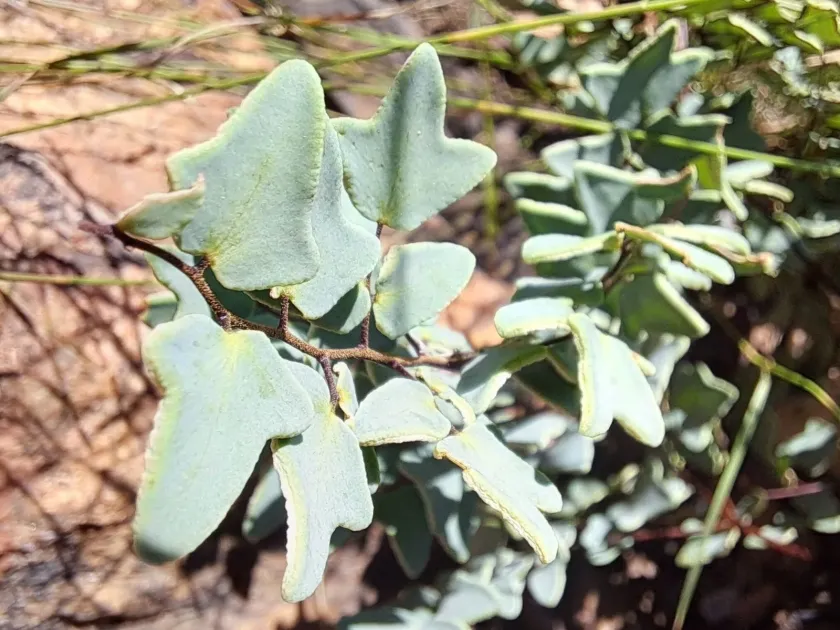
Pellaea calomelanos is a distinctive species of fern belonging to the Pteridaceae family. It is widely recognized for its leathery, dark-green fronds and its remarkable ability to tolerate drier conditions compared to most temperate or tropical ferns, making it a robust ornamental crop.
The native range of this plant encompasses Southern and Eastern Africa, where it predominantly grows in rocky crevices and slopes. This geographical background explains its high tolerance for mineral-rich, well-draining substrates and its adaptation to fluctuating moisture levels.
For successful cultivation, the soil substrate must prioritize drainage. A mixture containing coarse sand, perlite, and well-decomposed leaf mold is ideal. The use of porous pots, such as terracotta, is highly recommended to facilitate air circulation around the root zone and prevent root rot.
Regarding light requirements, Pellaea calomelanos thrives in bright, filtered light. While it can withstand periods of direct sunlight, exposure during the heat of the day can lead to foliar bleaching. Stable temperatures between 18°C and 24°C support steady growth throughout the active season.
Watering practices should follow the dry-down method: the substrate must be allowed to dry out significantly between waterings. Overwatering is the most common management error, as it quickly leads to the decay of the rhizome and subsequent failure of the plant.
Main diseases and pests
Fungal pathogens associated with damp soil conditions are the primary threat to the health of this fern. Root rot pathogens often manifest when drainage is inadequate, leading to the rapid yellowing and death of the fronds.
Scale insects are frequent pests that attach themselves to the undersides of leaves and along the petioles. Because of their hard protective shells, contact insecticides are often ineffective; therefore, systemic soil-drench applications are the preferred method of control.
Mealybugs can cluster in the sheltered parts of the plant, specifically near the base of the stems. If left unmanaged, they cause significant nutrient loss, leading to stunted development and weak frond formation.
Spider mites represent a significant risk in low-humidity environments, such as during winter months when heating systems are active. They feed on the underside of the foliage, resulting in characteristic mottling and eventual necrotic spots.
Bacterial leaf spot may occur if the foliage is frequently misted and remains wet for extended periods without adequate air circulation. Keeping the foliage dry and maintaining good environmental hygiene is essential for the long-term vitality of the crop.