
Pectocarya setosa
Pectocarya setosa
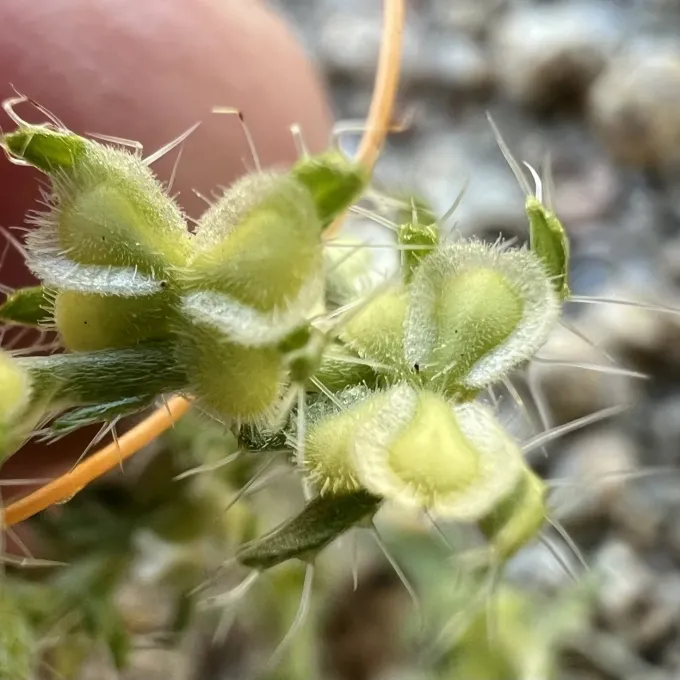
Description
Growing requirements
Pectocarya setosa, commonly known as bristly combseed, belongs to the Boraginaceae family. It is an annual herbaceous plant native to the arid desert regions of southwestern North America, specifically adapted to survive in extreme, low-moisture environments.
The plant thrives in sandy or gravelly soils where water retention is low. Its evolutionary strategy focuses on rapid growth and seed maturation during short, infrequent rainy periods characteristic of desert climates.
Botanically, Pectocarya setosa is distinguished by its small, slender leaves and nutlets characterized by rigid bristles. These structures are evolutionary adaptations designed for animal-mediated dispersal, allowing the seeds to hook onto passing organisms.
The environmental requirements include high solar intensity and well-drained, nutrient-poor substrates. The plant does not require high levels of soil fertility, as it has developed efficient nutrient uptake mechanisms suited for desert soils.
In terms of human use, this species is not considered a traditional agricultural crop. However, it is an essential component of desert biodiversity and is frequently monitored by ecologists to assess the health and stability of arid land ecosystems.
Main diseases and pests
In its natural habitat, Pectocarya setosa faces few specific agricultural diseases. The primary threat is the physiological stress induced by unpredictable drought cycles or, conversely, excessive moisture which leads to fungal colonization of the root system.
Herbivory by desert insects and small mammals can limit the reproductive success of the plant. However, due to its specialized chemical profile, it is less preferred by generalist herbivores compared to other succulent or soft-leaved species.
Invasive weed species represent a significant threat to its survival. Fast-growing non-native plants often outcompete Pectocarya setosa for limited space and water, causing local population declines.
Habitat destruction due to human activity, including urban development and off-road vehicle usage, poses a critical danger to populations. Such activities disturb the fragile soil crust where the seeds germinate.
Effective management and protection of this plant involve maintaining natural soil conditions and controlling the spread of invasive flora. Conservation efforts focus on preserving the delicate balance of the desert micro-habitats where it exists.