
Winged combseed
Pectocarya penicillata
Description
Growing requirements
Winged combseed (Pectocarya penicillata) is an annual herbaceous plant belonging to the Boraginaceae family. It is a specialized desert plant known for its adaptability to arid environments.
The native range of this species is primarily focused in the western regions of North America, including desert zones of the United States and Mexico, where it thrives in extreme heat.
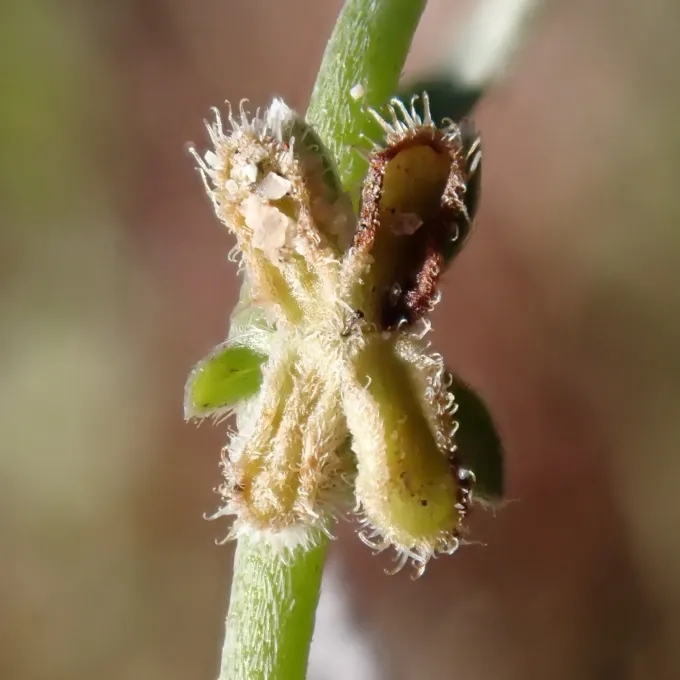
The botanical structure of the plant features thin, hairy stems and narrow leaves, which are critical adaptations for reducing water loss and surviving in water-stressed landscapes.
Regarding soil requirements, the plant favors sandy, rocky, or loose alluvial substrates that provide excellent drainage, ensuring the roots are not saturated for extended periods.
The lifecycle of the plant is closely tied to seasonal precipitation patterns, often completing its growth and reproduction cycle within a short window of optimal desert conditions.
Main diseases and pests
As a wild desert plant, winged combseed does not suffer from traditional agricultural pests or crop diseases commonly found in industrialized farming.
Environmental stressors such as the encroachment of invasive plant species often pose a greater threat to the population than localized biological pathogens.
Rare occurrences of fungal infections may appear if environmental conditions deviate from the historical norm, specifically during periods of high humidity.
Insects like locusts or specialized desert-dwelling herbivores may consume parts of the vegetation, but they generally maintain a balance with the plant's population dynamics.
Habitat loss due to development and changes in regional climate remain the most significant long-term threats to the preservation of the Pectocarya penicillata species.