
Curved-spine combseed
Pectocarya recurvata
Description
Growing requirements
Curved-spine combseed (Pectocarya recurvata) is an ephemeral annual plant belonging to the Boraginaceae family. This species is native to the arid desert regions of the Southwestern United States and Northern Mexico, showing remarkable adaptation to harsh, water-limited environments.
The plant typically inhabits sandy, gravelly, or rocky flats within desert scrub ecosystems. Its life cycle is perfectly synchronized with the brief periods of seasonal rain, allowing it to complete its development before the soil dries out completely in the heat of the summer.
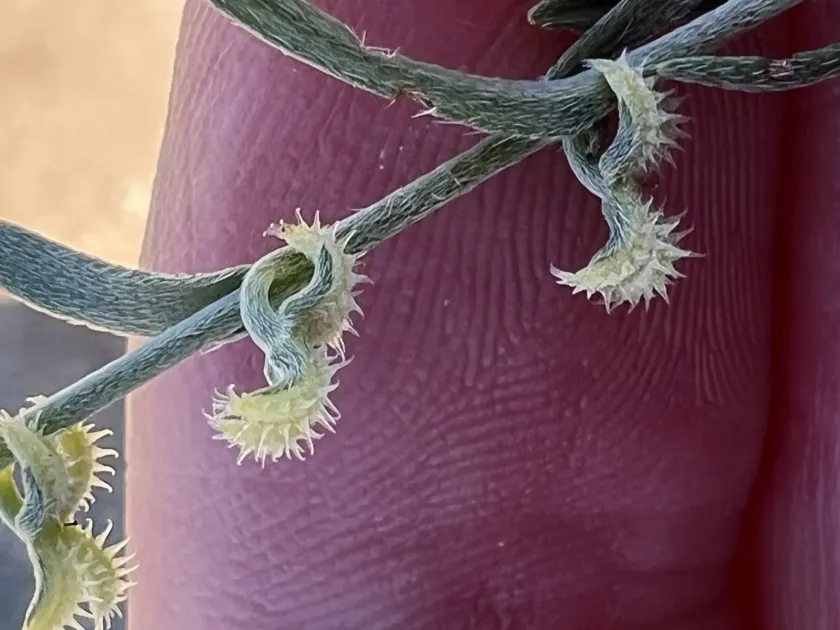
Botanically, Pectocarya recurvata is recognized by its small, prostrate to erect stems covered in stiff, coarse hairs. The leaves are linear or lanceolate, and the flowers are characteristically small, often white or pale blue, producing specialized nutlets with hooked spines for dispersal.
To thrive, this plant requires high solar radiation and low relative humidity. Soil requirements are minimal in terms of nutrients; however, excellent drainage is crucial to prevent root rot during the rare occurrences of heavy rainfall in its native desert habitat.
While not a traditional agricultural crop, this species holds ecological significance. It serves as a vital resource for desert soil stabilization and provides sustenance for local pollinator populations that are essential to the broader desert biome structure.
Main diseases and pests
The primary threats to Pectocarya recurvata involve habitat loss and environmental changes. Increased aridity caused by climate shifts can prevent the germination of seed banks, leading to a decline in local population density over successive seasons.
Regarding pests and diseases, the plant is relatively robust due to its life strategy as a desert ephemeral. It suffers minimal damage from traditional agricultural pests, as its short life cycle often avoids the peak activity times of many herbivorous insects.