
Pectocarya linearis
Pectocarya linearis
Description
Growing requirements
Pectocarya linearis is an annual herbaceous plant belonging to the Boraginaceae family. In the context of arid agriculture, it is recognized for its unique adaptation strategies that allow it to thrive in nutrient-poor, high-stress environments.
The plant originates from the arid regions of North and South America. It is naturally distributed in desert scrubland and sandy flats, where it has evolved to complete its life cycle rapidly during short-lived periods of soil moisture availability.
Successful cultivation requires highly permeable soils, preferably sandy or sandy-loam compositions. These soils must provide excellent drainage to prevent root suffocation, as the species is highly susceptible to hypoxia under waterlogged conditions.
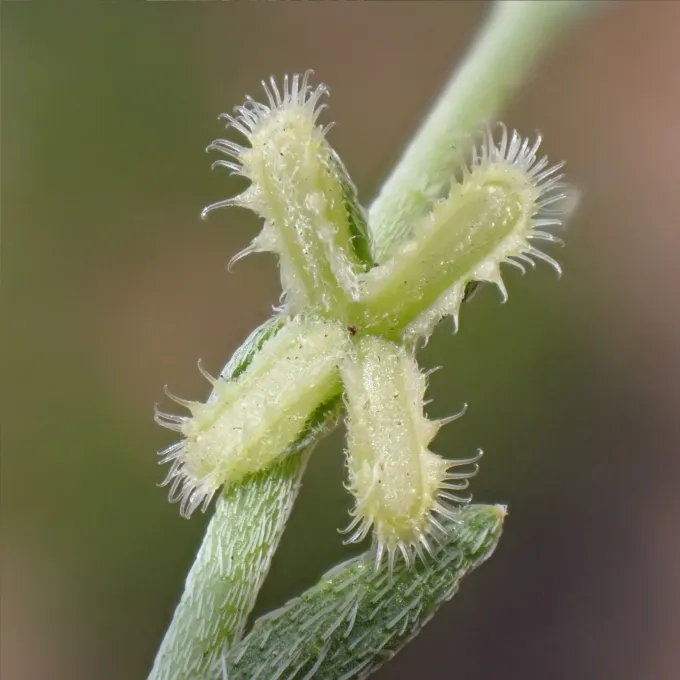
Botanically, Pectocarya linearis is characterized by its narrow, linear leaves and distinct small flowers. A notable feature is its seed morphology, which includes barbed structures, an adaptation designed to enhance dispersal by latching onto moving objects or animals.
The climate requirements center on intense light and high temperatures. Unlike typical commercial crops, this species flourishes when there is significant diurnal temperature variation, which regulates its metabolic processes and prevents fungal overgrowth.
Main diseases and pests
The primary threat to Pectocarya linearis is the development of soil-borne pathogens. In environments where drainage is insufficient, fungi such as Pythium species can cause rapid decay of the taproot system, leading to total crop failure.
Insect pests include various species of sap-sucking insects and grasshoppers. These pests can cause significant defoliation or introduce pathogens that weaken the plant's structural integrity during the flowering stage.
Competition from invasive plant species is a major management challenge. Because Pectocarya linearis is not aggressive, it requires manual or mechanical weeding to ensure it receives adequate sunlight and mineral nutrition during the vegetative stage.
Environmental fluctuations, particularly unexpected wet spells, are detrimental to the species. Such events disrupt the plant's acclimation to drought and favor the proliferation of competing vegetation and opportunistic parasites.
To mitigate these threats, producers must implement a strict integrated pest management strategy. This includes monitoring for early signs of chlorosis or wilting, which often indicate the onset of infection or nutrient stress.