
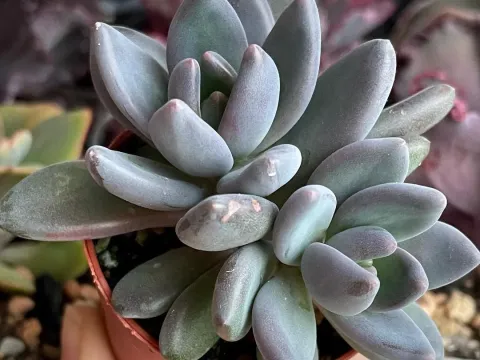
Pachyveria
Pachyveria
Pachyveria is a hybrid genus derived from the cross-breeding of Pachyphytum and Echeveria. As a member of the Crassulaceae family, it combines the structural elegance of its parents, forming dense, fleshy rosettes that are highly valued in decorative horticulture.
What the section contains


Pachyveria
Native to the arid regions of Mexico, this crop is adapted to high light intensity and low moisture environments. Successful cultivation requires a position with plenty of bright, indirect sunlight to maintain the compact growth habit and vibrant leaf colors.
The potting medium must be highly porous and inorganic. A professional succulent mix comprising coarse sand, perlite, and a small amount of pumice ensures efficient drainage, which is the cornerstone of healthy root development for this genus.
Temperature requirements involve keeping the plant in a warm environment during its growing season, typically between 20°C and 25°C. During the dormant winter phase, temperatures should be lowered to approximately 10°C to encourage healthy future blooms.
Watering must follow the "soak and dry" method, ensuring the soil is completely desiccated before the next irrigation. Overwatering is the most common cause of crop failure, as it easily triggers tissue collapse and root rot in these sensitive succulents.
Pachyveria is primarily susceptible to mealybugs and spider mites, which feed on the sap of the leaves. These pests thrive in dry environments with poor air circulation, making regular monitoring essential.
Fungal infections, such as root rot and stem rot, are the most frequent diseases encountered. They are almost always associated with improper irrigation practices or water logging in the root zone.
Management of pest outbreaks requires mechanical removal or the application of insecticidal soaps. For severe cases, systemic insecticides may be necessary to ensure the survival of the plant collection.
To mitigate disease risks, growers must prioritize soil drainage and ensure the potting container has ample drainage holes. Removing dead leaves from the base of the rosette prevents the accumulation of humidity and fungal spores.
Practicing good sanitation, including the sterilization of tools and the use of fresh, pathogen-free substrate, is the most effective strategy for maintaining the long-term health of the Pachyveria crop.