
Pachyveria albomucronata
Pachyveria albomucronata
Description
Growing requirements
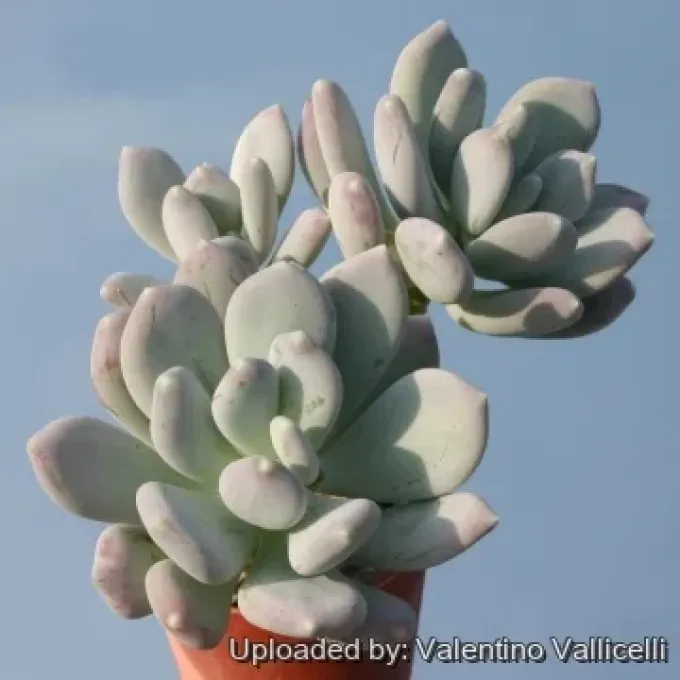
Pachyveria albomucronata is an intergeneric hybrid resulting from the crossing of Pachyphytum and Echeveria species. As a perennial succulent belonging to the Crassulaceae family, it is highly valued for its dense rosette structure and fleshy leaves with a distinct pointed tip.
The native habitat of this crop spans the arid regions of Mexico, where plants have adapted to significant diurnal temperature fluctuations. In horticultural production, it is typically grown in greenhouses where maintaining high-intensity light levels is a critical factor for success.
Optimal growth requires well-draining substrates composed of mineral grit, coarse sand, and a small amount of peat moss. Water stagnation in the root zone is fatal to the species; therefore, the substrate pH should be kept within the slightly acidic to neutral range.
During the active growth phase, temperatures should ideally range between +20 and +26 degrees Celsius. In winter, the plant enters a state of dormancy, necessitating a temperature reduction to +10–12 degrees to ensure proper rosette formation and prevent elongated, etiolated stems.
Irrigation must follow the practice of allowing the soil medium to dry out completely between waterings. It is imperative to avoid getting water into the center of the leaf rosette, as moisture trapped in the crown often causes rot and permanent tissue deformation.
Main diseases and pests
The primary pests affecting this crop in controlled environments are mealybugs and root mealybugs. These insects congregate in leaf axils, depleting plant cell sap and weakening the structure, which often invites secondary fungal infections.
High relative humidity combined with low temperatures facilitates the growth of powdery mildew and various bacterial rots. To mitigate these risks, it is essential to ensure consistent air circulation within the growing area and strictly adhere to the irrigation schedule.
For pest control, systemic insecticides are recommended, as they effectively target hidden insect populations. Growers should perform routine inspections, especially during the critical transition period between winter dormancy and the beginning of the spring growth cycle.
Root rot most frequently develops due to heavy, compacted substrate or excessive organic fertilization that retains moisture for too long. Preventive measures include using sterile soil mixtures and maintaining a substantial drainage layer at the bottom of all containers.
If waterlogging occurs and root damage is detected, emergency repotting is necessary, including the excision of necrotic tissue and thorough drying of the cut surfaces. A healthy plant is characterized by firm, turgid leaves free of spots and a prominent wax coating on the epidermis.