
Upright goosefoot
Oxybasis urbica
Description
Growing requirements
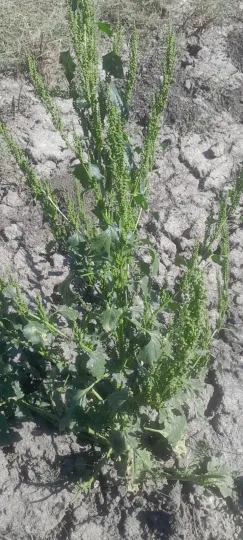
Upright goosefoot (Oxybasis urbica) belongs to the Amaranthaceae family and is an annual herbaceous plant. It typically thrives in nitrogen-rich, moist soils, often colonizing disturbed habitats and rural landscapes.
The plant exhibits high adaptability to varied soil profiles, although it shows a marked preference for nutrient-dense environments. It is often found in sites with significant human impact, such as fields and roadsides.
Climatic requirements involve a preference for temperate zones with consistent moisture during the spring and early summer growing phases. Sunlight is a limiting factor; the plant performs best in open, unshaded areas.
Botanically, it is recognized by its erect habit and distinct leaf morphology, which allows for efficient photosynthesis in competitive ecological niches. The root system is deep, anchoring the plant firmly.
Agricultural management requires careful observation of soil nutrient levels, as the plant acts as a strong competitor for nitrogen and phosphorus when emerging within cash crop fields.
Main diseases and pests
Pathogenic threats include fungal infections such as powdery mildew and downy mildew, which can compromise the structural integrity of the stems and leaves during humid seasons.
Pest populations, including beet aphids and leaf miners, frequently target the foliage of Oxybasis urbica. These insects can cause significant stunted growth if infestations occur early.
The plant acts as a biological host for several viral pathogens that can bridge the gap to economically important crops. Therefore, controlling its population is essential in integrated pest management.
Nematodes inhabiting the rhizosphere can also cause physical stress to the plant, particularly in heavy or waterlogged soil conditions where root health is already challenged.
- Fungal spore colonization during damp weather.
- Insect-mediated stress affecting photosynthetic capacity.
- Viral disease transmission risks to adjacent crops.