
Oak-leaved goosefoot
Oxybasis glauca
Description
Growing requirements
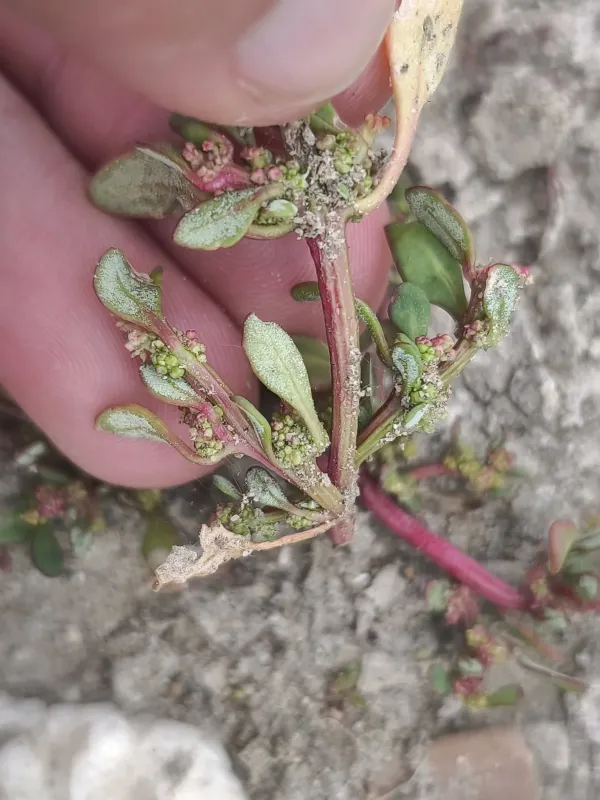
Oak-leaved goosefoot (Oxybasis glauca) is a herbaceous annual plant belonging to the Amaranthaceae family. It is characterized by prostrate or ascending stems that reach a height of 10 to 40 cm, often forming dense mats on open, disturbed soil surfaces.
The leaves are distinctively rhombic-ovate in shape with entire or shallowly dentate margins. The lower surface is covered with a characteristic greyish mealy indumentum, which provides a cooling effect and aids in moisture retention under harsh environmental conditions.
The plant thrives in nitrogen-rich, moderately moist soils and exhibits a notable tolerance to saline environments. It is frequently found in arable lands, waste grounds, and along roadsides, indicating its high adaptability to anthropogenic landscape disturbances.
Reproduction is strictly seed-based, with the plant producing vast numbers of small, hardy seeds. These seeds are capable of remaining dormant in the soil for several years, which significantly contributes to the species' persistence in diverse agricultural ecosystems.
While often categorized as an agricultural weed, the species has historical value as a potential source of greens or livestock forage in specific regions where more demanding crops cannot thrive due to salinity or poor soil conditions.
Main diseases and pests
As a member of the Amaranthaceae family, Oxybasis glauca is susceptible to various fungal pathogens, such as powdery mildew and downy mildew, which are particularly prevalent during periods of high humidity and poor ventilation within the plant canopy.
Insect pests, including aphids and leaf miners, frequently utilize this plant as a host. These pests can significantly reduce the photosynthetic capacity of the plant and act as vectors for various plant viruses that affect neighboring cash crops.
Management strategies focus on integrated weed control. Mechanical weeding is effective in the early vegetative stages before seed set occurs, as preventing the replenishing of the soil seed bank is critical for long-term population reduction.
Chemical control involving systemic herbicides is used in large-scale agriculture to manage populations in fields where the plant competes with primary crops for water, nutrients, and sunlight.
Field sanitation and the management of surrounding non-crop areas are essential to prevent the spread of both the weeds themselves and the pests that utilize them as primary or secondary host plants.