
Oxyanthus pyriformis
Oxyanthus pyriformis
Description
Growing requirements
Oxyanthus pyriformis is a woody perennial shrub belonging to the Rubiaceae family, native to the tropical forests of Africa. In its natural habitat, it thrives in shaded, humid environments, growing under the canopy of larger trees, which dictates its preference for filtered light.
Agricultural success with this species depends heavily on precise climate control. It requires a consistent temperature range between 22°C and 28°C and humidity levels that do not drop below 70%. Exposure to cold drafts or dry indoor air can be detrimental to the plant's overall health and vitality.
The ideal growing medium should be well-drained, porous, and slightly acidic, with a pH ranging from 5.5 to 6.5. A mixture of peat, pine bark, and perlite provides the necessary structure to prevent compaction while retaining enough moisture to support root development without inducing rot.
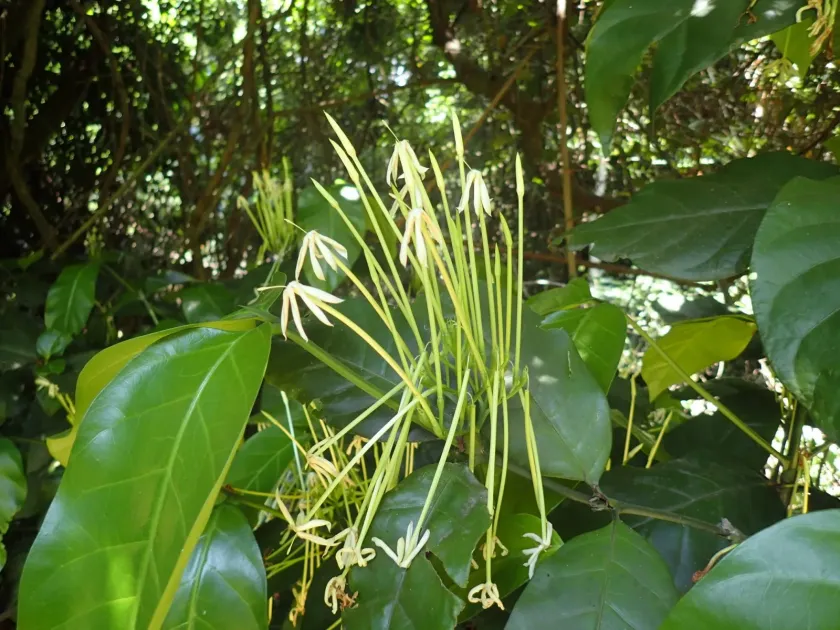
Botanically, the plant is recognized by its glossy, deep green leaves and elongated, tubular flowers that release a distinct fragrance. Its growth cycle is relatively slow, requiring a steady supply of balanced liquid fertilizer during the active growing season to support its foliage and flower production.
Commercial or ornamental use of Oxyanthus pyriformis is primarily focused on conservatory cultivation. Due to its specific ecological needs, it is rarely grown as a field crop, requiring specialized greenhouse infrastructure to manage light, temperature, and moisture levels effectively throughout the year.
Main diseases and pests
Pests represent a major threat to the cultivation of Oxyanthus pyriformis, particularly in greenhouse settings where spider mites and mealybugs can proliferate rapidly. Integrated pest management (IPM) strategies, including biological control agents, are recommended for maintaining plant health.
Pathogenic fungi, such as Phytophthora and Pythium, pose significant risks if soil moisture remains excessively high. Implementing strict irrigation scheduling and ensuring optimal air circulation are the most effective management tools to prevent root-related diseases and crown rot.