
Oxyanthus formosus
Oxyanthus formosus
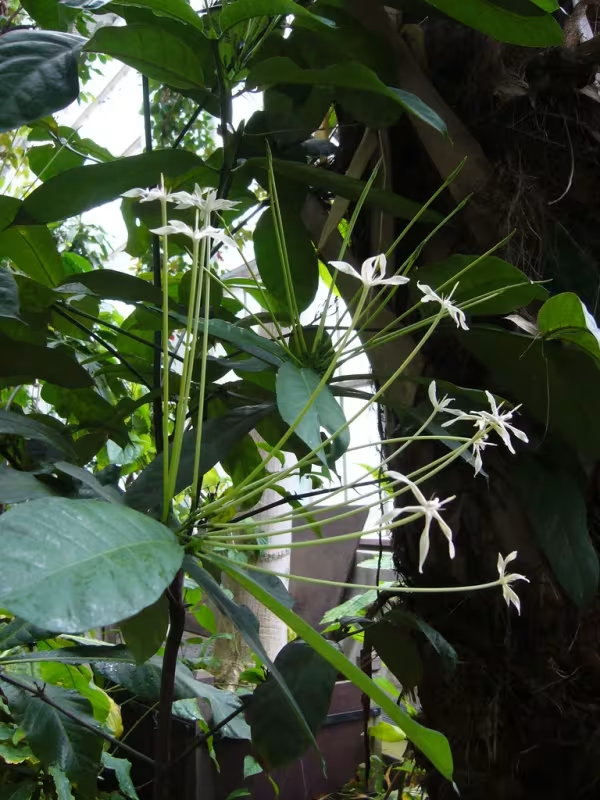
Description
Growing requirements
Oxyanthus formosus is a distinctive member of the Rubiaceae family. It typically grows as an evergreen shrub or a small-to-medium-sized tree, characterized by its resilient woody structure.
The plant is native to tropical African regions, thriving in forest understories. This habitat dictates its preference for shaded environments and consistent ambient humidity throughout the year.
Botanically, it features large, deep green, opposite leaves and notable clusters of white or pale-colored tubular flowers that emit a strong fragrance, especially during nocturnal cycles.
It requires rich, loamy soils that maintain high organic matter content. Proper drainage is essential, as the roots are sensitive to waterlogging, which can lead to rapid pathogen accumulation.
The climate requirements include high temperatures and protection from strong, drying winds. When cultivated outside its natural range, greenhouse conditions with misting systems are often employed.
Harvesting
The primary agricultural utility of Oxyanthus formosus lies in its potential pharmaceutical applications and its value as an ornamental plant in specialized tropical horticulture.
Harvesting for botanical extracts involves the careful pruning of mature leaves and bark. Practitioners focus on sustainable harvesting methods to ensure the long-term viability of the plants.
The fruits, small drupes, are collected primarily for seed dispersal and propagation purposes. It is vital to time the harvest accurately to ensure high seed germination rates.
Post-harvest handling requires immediate cooling to maintain the integrity of volatile compounds within the plant tissues, especially when harvesting for medicinal purposes.
Standard quality control includes moisture content testing and visual inspection to ensure that the gathered material is free from biological contaminants such as fungi or mites.