
Ottelia ulvifolia
Ottelia ulvifolia
Description
Growing requirements
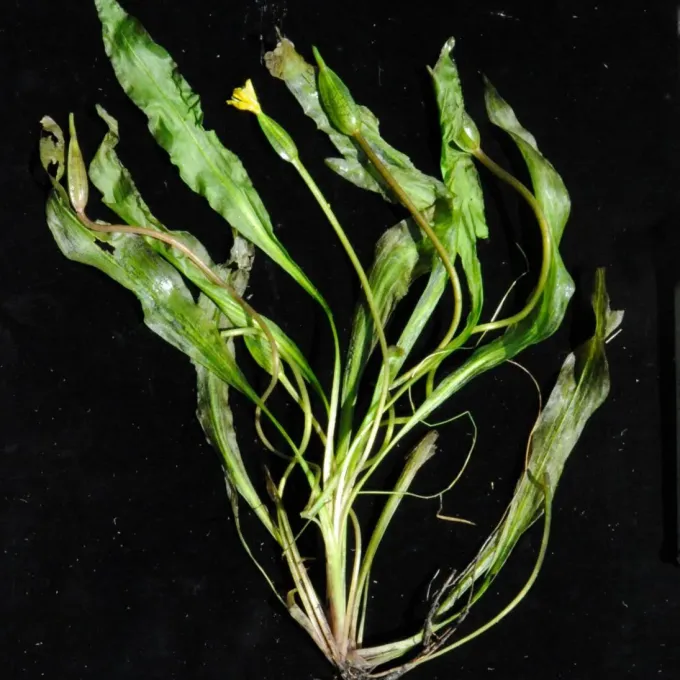
Ottelia ulvifolia is a fascinating perennial aquatic plant belonging to the Hydrocharitaceae family. It originates from the tropical regions of Africa and Madagascar, where it thrives in slow-moving freshwater habitats and shallow basin edges.
The plant features a basal rosette of delicate, translucent, and wavy-edged leaves that can grow significantly in length. Its root system is robust, allowing the plant to anchor firmly into the substrate and absorb essential minerals from the bottom layers of the environment.
Temperature management is critical for the healthy cultivation of this species. Ideally, the water temperature should remain stable between 22 and 28 degrees Celsius, as extremes in thermal variation can lead to significant physiological stress for the specimen.
Substrate composition must be nutrient-dense. Using a rich, clay-based soil or specialized aquarium substrate helps provide the necessary ions for leaf development. Because this species is a heavy root-feeder, periodic fertilization is essential to maintain its vibrant appearance.
Lighting requirements for Ottelia ulvifolia are moderate to high. The plant needs consistent and full-spectrum light to perform photosynthesis efficiently. Without adequate illumination, the leaves become pale and the rosette may fail to produce new growth successfully.
Main diseases and pests
Root rot represents the primary threat to the health of Ottelia ulvifolia. This usually occurs when the substrate becomes compacted and anaerobic, leading to the accumulation of toxic gases that damage the root system and cause the plant to collapse.
Algal blooms pose a persistent challenge in cultivation. If light intensity or nutrient levels are poorly managed, hair or spot algae can quickly overwhelm the broad, delicate leaves, effectively choking the plant and preventing gas exchange.
Pathogenic bacterial infections can manifest as sudden melting of leaf tissue. This condition is often triggered by poor water quality, specifically high concentrations of nitrates or rapid fluctuations in pH levels, which weaken the plant's natural immune response.
Invertebrate pests, particularly hungry aquatic snails, can cause cosmetic and structural damage by grazing on the succulent leaves. Maintaining a controlled environment is necessary to prevent these pests from reaching populations that could harm the specimen.
Nutrient deficiencies, specifically iron and manganese, are common issues that lead to chlorosis. Growers must monitor the foliage closely for yellowing patterns, ensuring that trace elements are supplied consistently through the substrate to prevent plant degradation.