
Ottelia lanceolata
Ottelia lanceolata
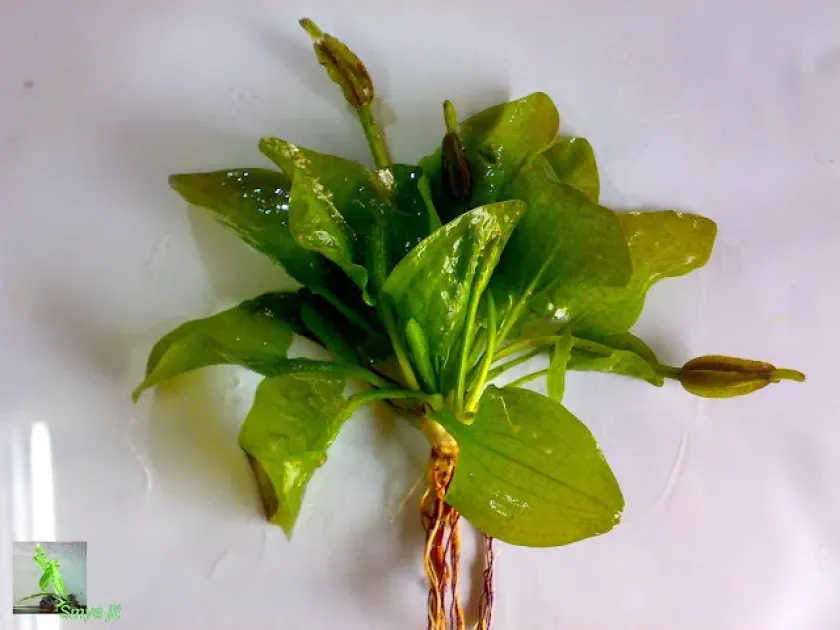
Description
Growing requirements
Ottelia lanceolata is a perennial aquatic plant belonging to the Hydrocharitaceae family. It is native to the tropical regions of Africa, where it thrives in slow-moving streams, pools, and shallow lakes with nutrient-rich substrates.
The plant features a distinct basal rosette of lanceolate, submerged leaves and a robust root system adapted for anchoring in soft, muddy bottoms. Its biological role includes oxygenation and nitrogen uptake within its natural aquatic environment.
Successful cultivation requires stable tropical water temperatures ranging from 22 to 28 degrees Celsius. Providing a nutrient-dense substrate is essential, as the plant draws a significant portion of its minerals through its root system rather than from the water column alone.
Lighting is a fundamental limiting factor for this species. To maintain healthy growth and coloration, high-intensity artificial light or direct sunlight is necessary, often supplemented with CO2 injection to maximize the rate of photosynthesis.
In modern agriculture and horticulture, Ottelia lanceolata is primarily grown for the ornamental plant trade, serving as a flagship species for high-end aquatic landscapes. Its elegant leaf structure makes it a highly sought-after plant for professional aquascaping.
Main diseases and pests
The primary threats to this culture are bacterial and fungal infections that arise in poorly maintained, anaerobic substrates. Improper water chemistry, specifically high concentrations of nitrates or fluctuating pH levels, can lead to severe stress and tissue necrosis.
Pests, such as freshwater snails or herbivorous insects, may cause mechanical damage to the delicate leaf blades. Additionally, the rapid spread of invasive filamentous algae can easily outcompete the plant for nutrients and light, ultimately leading to its decline.