
Operculina brownii
Operculina brownii
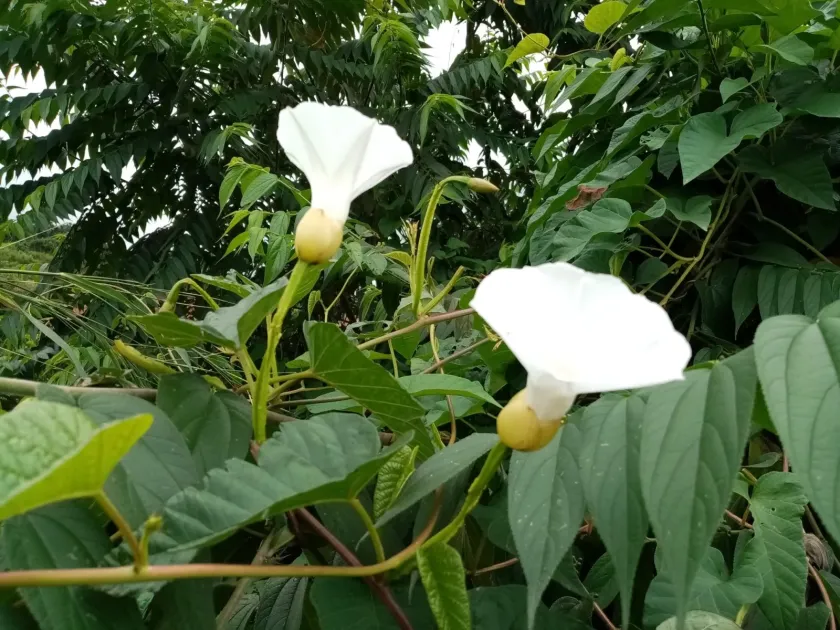
Description
Sowing dates
Operculina brownii is a member of the Convolvulaceae family. It is a perennial herbaceous climbing plant that exhibits active growth under natural conditions when provided with support.
Seeds of this crop require pre-sowing treatment, including scarification of the hard outer coat to accelerate germination. Sowing is usually carried out during periods with stable, warm temperatures.
The seeding depth is 2–3 centimeters in well-warmed, moist soil. If the temperature is maintained between 25 and 28 degrees Celsius, the first shoots appear within 10–14 days.
Ensuring uniform lighting from the moment the first true leaves appear is a crucial stage. The plant quickly moves into the phase of vegetative mass formation, requiring the installation of vertical trellises.
Sowing dates in industrial conditions correlate with the beginning of the rainy season, which ensures the crop's natural requirement for high humidity during the initial stages of development.
Growing requirements
The crop prefers well-drained, fertile loamy soils with a neutral or slightly acidic pH. Water stagnation in the root zone is detrimental to this species, so raised beds are necessary on heavy soils.
Climate requirements include high average annual temperatures and no sharp drops during the night. The plant is a tropical species, so the critical point for growth arrest is plus 15 degrees Celsius.
The light regime should be intense, although in the first weeks of life, the plant may need slight shading from direct midday sun. The length of the daylight hours significantly affects the speed of entering the flowering phase.
Agricultural practices include regular application of nitrogen fertilizers during the period of intensive leaf mass accumulation and potassium top dressing before the start of flowering. Regular weeding is necessary only in the first month of growth.
The crop responds positively to mulching the root zone, which allows for maintaining a stable moisture level and prevents soil overheating during the hot season.
Main diseases and pests
The main diseases include fungal infections of the root system caused by excessive moisture and poor air circulation. These manifest as root rots and wilting of the vines.
Pests such as spider mites and whiteflies often attack the plant in greenhouse conditions or when air humidity is low. Regular inspections of the underside of the leaves allow for early detection.
Powdery mildew can affect the plants if plantation ventilation is poor. Prevention consists of following an optimal planting scheme to ensure free air circulation between plants.
Sometimes, damage is observed from caterpillars of various moth species that actively feed on the vegetative parts of the plant. Biological insecticides applied in the evening are used for control.
Nematodes can pose a threat when growing on soils that have not undergone preliminary disinfection. The use of green manure in crop rotation helps to reduce the population of soil pests.