
Operculicarya decaryi
Operculicarya decaryi
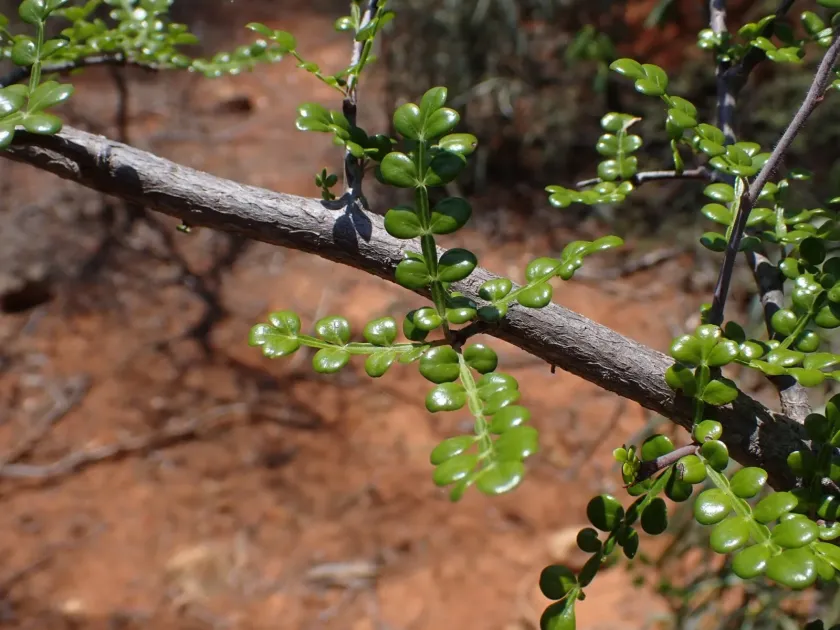
Description
Growing requirements
Operculicarya decaryi is a succulent plant species belonging to the Anacardiaceae family. Renowned for its zigzagging, woody branches and attractive caudex-like base, it has become a highly sought-after specimen in the world of professional bonsai and arid plant collections.
Originating from the island of Madagascar, this species is naturally adapted to dry, rocky environments. Its biological structure allows it to thrive in nutrient-poor soils and withstand significant fluctuations in environmental moisture, characteristic of its native habitat.
In terms of light requirements, Operculicarya decaryi demands full, intense sunlight to maintain its characteristic compact form. When cultivated indoors, it should be placed in the brightest window available, as insufficient light will result in etiolated and weakened growth.
The soil substrate must be highly inorganic, prioritizing excellent drainage over nutrient density. A blend of pumice, coarse sand, and lava rock is ideal, ensuring that water passes through the pot rapidly to prevent any risk of root rot during dormancy.
Watering practices should follow the plant's seasonal cycle. During the growing season, regular watering is necessary, provided the soil dries out completely between applications. During winter months, irrigation should be strictly limited to prevent physiological stress or decay.
Main diseases and pests
Root rot remains the most significant threat to Operculicarya decaryi, usually caused by overwatering or substrate compaction. Once the root system is damaged by excess moisture, the plant's ability to recover becomes extremely limited.
Spider mites represent a major pest risk, particularly in dry and poorly ventilated indoor environments. These pests primarily target the soft, emerging leaves, leaving characteristic stippling and webbing that can severely weaken the plant if left unchecked.
Mealybugs are another common concern, often hiding in the crevices of the trunk or at the base of the petioles. Their presence can be identified by white, cotton-like secretions, which necessitate immediate treatment with systemic insecticides or isopropyl alcohol.
Fungal infections can develop on the bark or branches if the plant is kept in high-humidity areas without proper air movement. Improving ventilation and ensuring the plant has enough sunlight are the most effective preventative measures against fungal growth.
Scale insects can occasionally infest the thicker, older parts of the woody stems. Hand removal or specific horticultural oils may be used to manage these pests, provided the concentration is safe for the plant's foliage and bark structure.