
Operculicarya borealis
Operculicarya borealis
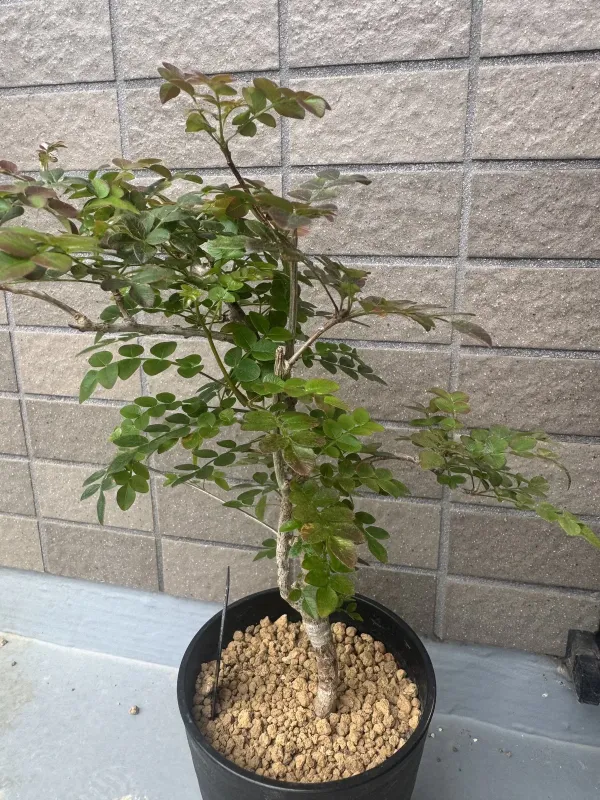
Description
Growing requirements
Operculicarya borealis is a distinctive member of the Anacardiaceae family, native to the northern regions of Madagascar. It is primarily valued as a caudiciform plant, characterized by its swollen base that stores water, an evolutionary adaptation to arid environments.
Cultivation requires intense, bright light to maintain a compact growth habit and a healthy caudex. Without sufficient exposure to sunlight, the plant tends to elongate and lose its unique structural aesthetics, making high-intensity light essential.
The growing medium must be highly porous and inorganic. A mix composed of grit, pumice, and minimal organic matter is ideal to facilitate rapid drainage, ensuring that roots are never left in standing water for extended periods.
Temperature management is critical for this species. It thrives in warm conditions during the growing season, typically between 20°C and 30°C, and requires protection from frost, as it is strictly a tropical to subtropical plant.
Watering should be approached with caution, following a cycle of full saturation followed by a complete dry-out of the substrate. During the winter dormancy phase, watering should be significantly reduced or stopped entirely to prevent dormancy rot.
Main diseases and pests
Root rot, caused by overwatering or poor soil drainage, is the primary threat to the health of Operculicarya borealis. Once the rot reaches the caudex, the plant is extremely difficult to save, making preventive moisture management paramount.
Pests such as mealybugs and spider mites are known to infest the plant, particularly in low-ventilation environments. These pests thrive in dry air and can rapidly colonize new shoot growth.
Control measures involve the application of appropriate systemic insecticides. It is essential to choose products that are safe for succulents, as some high-concentration chemicals can cause leaf burn or tissue damage to the caudex.
Maintaining adequate airflow is one of the most effective preventive measures against fungal infections. Poor circulation leads to microclimates that encourage the growth of mold and mildew on the plant's surface.
Regular sanitation of pruning tools is necessary to prevent the transmission of bacterial infections during routine maintenance or propagation, ensuring long-term health for the botanical specimen.