
Taurian cotton thistle
Onopordum tauricum Willd.
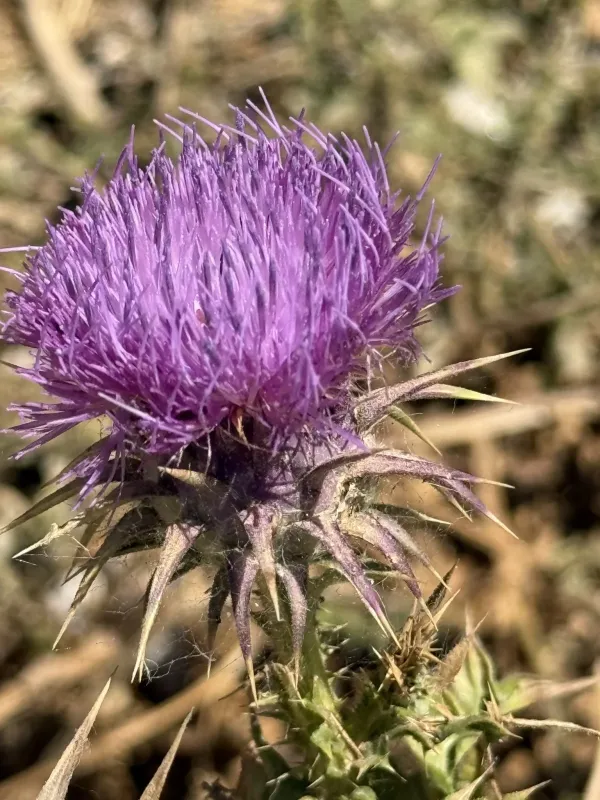
Description
Sowing dates
Taurian cotton thistle (Onopordum tauricum Willd.) is a robust biennial herbaceous plant belonging to the Asteraceae family. In agricultural practices, seeds are typically sown in late autumn or early spring once the soil reaches a temperature of 5–8 degrees Celsius.
For successful germination, maintaining adequate soil moisture during the first few weeks of vegetation is essential. The crop is sown in rows with spacing of 45–60 centimeters, ensuring sufficient space for the plant's massive leaf rosettes to develop.
The optimal seeding depth is 1–2 centimeters, depending on the soil structure. Early spring sowing is generally preferred in regions with extended spring periods to capitalize on soil moisture reserves.
The plant demonstrates high germination energy. During its first year, it focuses on developing a powerful root system and a vegetative rosette, while in its second year, it produces a tall, branching flower stem.
Plant density should be managed based on the intended use, whether for seed production or biomass. A standard density of 20,000 to 30,000 plants per hectare is usually recommended to ensure healthy crop development.
Growing requirements
This species is characterized by exceptional drought resistance, making it suitable for cultivation in poor, rocky, or sandy soils. It thrives in well-lit areas, as shade significantly reduces the concentration of its secondary metabolites.
The ideal soil pH for Onopordum tauricum ranges from 6.5 to 7.5. It does not tolerate waterlogging or high groundwater levels, which can lead to root rot, especially during the dormant winter period.
It is well-adapted to continental climates with hot, dry summers and cold winters. The deep taproot allows the plant to access subsoil moisture, which is vital for survival during periods of extreme heat and minimal precipitation.
Minimal fertilization is required as the plant effectively utilizes nutrients from deep soil layers. However, applying phosphorus-potassium fertilizers on exhausted lands can significantly boost flower development and overall vigor.
Due to its physical defenses (spines), the crop is less prone to grazing by herbivores, which simplifies field protection strategies and allows for integration into sustainable low-maintenance agroecosystems.
Yield
The industrial use of Taurian cotton thistle is quite diverse. It is primarily valued in the pharmaceutical industry as a raw material for producing cardiotonic and anti-inflammatory agents derived from its aerial parts.
In apiculture, the plant serves as a late-summer honey plant, providing bees with high-quality nectar during a period when most other field crops have finished blooming, thus supporting honeybee colony strength.
The seeds of the plant contain up to 25% fatty oil, which can be utilized for technical purposes, such as in the paint and varnish industry. Extracts from the roots and leaves are also used in traditional herbal medicine.
Average biomass yields reach 15–20 tons per hectare, highly dependent on crop density and seasonal weather conditions. Seed production remains a profitable secondary activity for farmers specializing in medicinal herbs.
The plant is also gaining popularity as an ornamental element in xeriscaping. Its unique structure and long-lasting flowering make it a sustainable choice for arid landscaping projects that require minimal water.
Main diseases and pests
Although highly resilient, Taurian cotton thistle is susceptible to fungal diseases like white rot (Sclerotinia), especially under conditions of high humidity or poor field drainage, which hinders overall productivity.
Powdery mildew can affect the foliage during the flowering stage, reducing the market quality of the medicinal material. Preventive measures include maintaining proper row spacing and ensuring good field ventilation.
Insect pests, particularly weevil larvae, can cause significant damage to flower heads, reducing seed yield. Targeted insecticide treatments should be restricted to the pre-flowering stage to protect local pollinators.
Aphids may occasionally colonize young shoots, weakening the plant. However, in most cases, biological control methods utilizing predatory insects are more than sufficient to manage these populations without chemicals.
Regular field scouting is critical to identify potential disease outbreaks or pest infestations early, allowing for localized interventions before they spread throughout the entire cultivated area.
Harvesting
Harvesting the aerial parts of the plant for medicinal use should be conducted during the mass flowering phase. This timing ensures the highest concentration of biologically active compounds within the flower heads and leaves.
For seed collection, growers must wait until the flower heads are dry and have turned brown. Timely harvesting is crucial, as the seeds are equipped with pappus and are easily dispersed by the wind.
Mechanized harvesting is performed using combines adjusted for large seed structures. Due to the toughness and spiny nature of the stems, specialized shredding attachments are often used to ease the process.
The harvested material must be dried immediately in well-ventilated areas or industrial driers at temperatures not exceeding 45 degrees Celsius to preserve its medicinal and chemical properties.
Proper storage is essential; the dried raw material should be kept in airtight, moisture-proof containers away from direct sunlight, ensuring a shelf life of up to three years under stable conditions.