
Cotton thistle
Onopordum acanthium L.
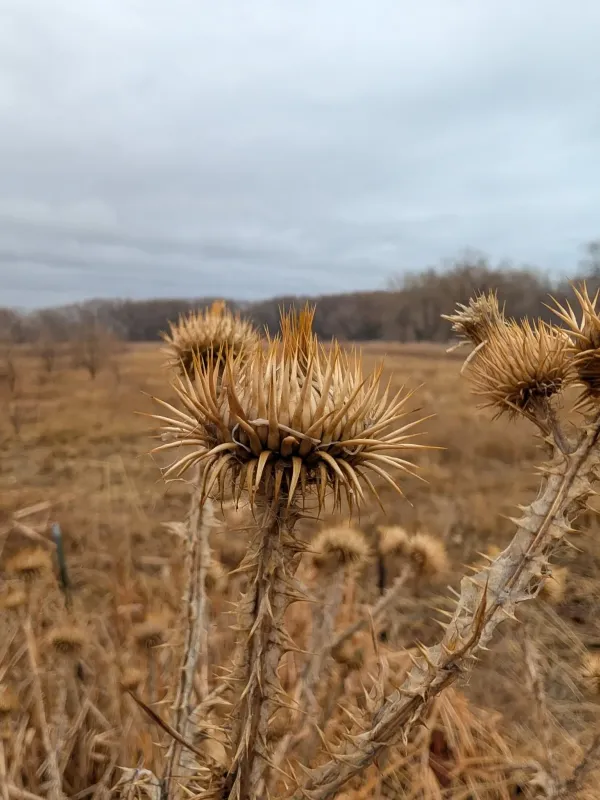
Description
Sowing dates
Cotton thistle is a biennial plant, and the most common practice is to sow seeds in late autumn or early spring when soil temperatures reach 5–8 degrees Celsius.
The seeds require a period of cold stratification to break dormancy, which makes late autumn sowing a highly effective method for achieving uniform germination.
Sowing depth should be kept shallow, between 1 to 2 centimeters, as deeper planting can significantly reduce the energy and success rate of emergence.
Spacing between rows should typically be 45 to 60 centimeters, providing enough room for the development of the basal rosette of leaves.
The recommended seeding rate is approximately 2–3 kilograms per hectare, depending on the purity and viability of the purchased seeds.
Growing requirements
Belonging to the Asteraceae family, Cotton thistle thrives in open, sunny environments and is highly sensitive to shading by other vegetation.
The plant is not overly demanding regarding soil quality, though it prefers well-drained sandy or loamy soils with moderate fertility levels.
It is characterized by exceptional drought resistance, supported by a deep taproot system that allows the plant to access groundwater in dry seasons.
Optimal growth occurs in temperate climates where temperatures range from 18 to 25 degrees Celsius throughout the active growing season.
Proper field drainage is crucial, as waterlogged conditions often lead to root rot and other physiological issues that can damage the crop.
Yield
Under favorable cultivation conditions, the total dry mass yield of Cotton thistle can reach 15–20 decitonnes per hectare for pharmaceutical processing.
Seed yields generally range from 3 to 5 decitonnes per hectare, providing sufficient material for replenishing stocks for the following seasons.
The primary economic use involves the collection of flower heads and leaves, which are rich in secondary metabolites like flavonoids and saponins.
In addition to medicinal use, the plant is a significant nectar source, attracting various pollinators and supporting local biodiversity in agricultural fields.
Profitability is largely driven by the quality of the raw material, necessitating careful drying and handling procedures after the harvest.
Main diseases and pests
Pest pressure is mainly exerted by aphid populations, which can stunt the growth of young rosettes and damage emerging flower buds.
Fungal pathogens like powdery mildew are common in humid conditions, especially if plant spacing is too dense to allow proper air circulation.
Rust diseases can also impact the leaves, potentially reducing the overall quality of the harvested material if not managed through proper hygiene.
Effective management includes crop rotation and the prompt removal of infected plant parts to prevent the spread of diseases within the plantation.
Integrated pest management strategies are encouraged to maintain the purity of the medicinal product while minimizing environmental impacts.
Harvesting
The harvesting of flower heads should occur during peak bloom, which is the period when the concentration of active medicinal compounds is highest.
Leaves are typically harvested before the plant enters the flowering phase to ensure the best chemical profile for extraction purposes.
After collection, the plant material must be dried in shaded, well-ventilated areas or specialized dryers at temperatures not exceeding 45 degrees Celsius.
Handling requires protective equipment, such as heavy-duty gloves, due to the sharp, rigid spines that cover the stems and leaves of the plant.
Finished dried products should be stored in dry, light-protected containers to preserve their potency and prevent degradation for up to two years.