
Onopordum acaulon
Onopordum acaulon L.
Description
Sowing dates
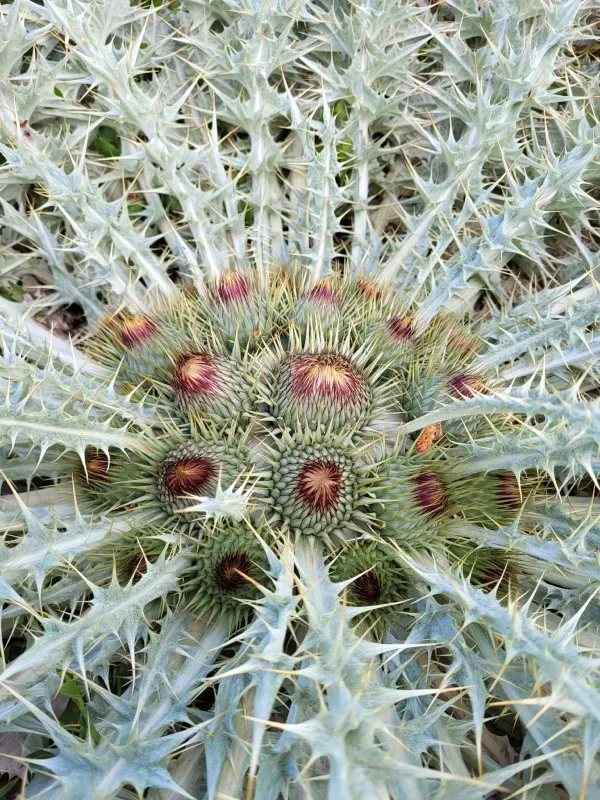
Onopordum acaulon L., commonly known as the stemless cotton thistle, is a perennial plant belonging to the Asteraceae family. It is characterized by its distinct low-lying rosette growth habit, where the stem remains extremely short or absent throughout its life cycle.
The optimal sowing time is during early spring once the soil temperature consistently reaches 8–10 degrees Celsius. Fall sowing is also a viable option in regions with mild winters, allowing the seeds to undergo natural stratification, which enhances germination uniformity.
Seeds should be sown at a depth of 2 to 3 centimeters to ensure proper establishment. Once sown, the soil surface should be lightly compacted to facilitate capillary water movement to the seeds, which is vital for starting the germination process.
Standard agronomic practices suggest row spacing of 45 to 60 centimeters. This provides enough space for the rosettes to expand fully without competing for light or space, and it allows for easier weed control using mechanical equipment.
Initial growth is notably slow, as the plant invests energy into building a deep taproot. During this period, farmers must ensure that the plots are kept free of competitive weeds to prevent the young plants from being choked out.
Growing requirements
This species thrives in areas with full sun exposure. It is a heliophilous plant that requires direct light to maintain a healthy rosette structure and to promote vigorous metabolic activity within its leaves.
Well-drained soil is non-negotiable for Onopordum acaulon. Sandy loam or well-aerated silty soils with neutral pH levels are ideal. The species is highly sensitive to waterlogged conditions, which can cause root damage or death within a short period.
The plant is highly adapted to arid and semi-arid conditions. Once the root system is established, it can withstand prolonged periods of drought, drawing water from deeper soil horizons where other crops might struggle.
The ideal temperature for active growth ranges between 18 and 25 degrees Celsius. While it is hardy, it prefers climates with moderate fluctuations; extreme heat combined with high humidity can create stress conditions that are not favorable for the plant's physiology.
Fertilization should be handled with care. A nutrient program focused on phosphorus and potassium is recommended to support root development. Excess nitrogen can lead to excessive foliage growth, which may increase the plant's susceptibility to lodging or fungal infections.
Main diseases and pests
Aphids are the primary insect threat, as they colonize the underside of the leaves and extract nutrients. Regular monitoring is essential to intervene before the population reaches an economic threshold that requires chemical application.
Powdery mildew represents the most significant fungal risk, especially in environments where humidity levels are poorly controlled. Ensuring adequate air circulation between plants is the most effective cultural method to prevent this disease from taking hold.
Root rot caused by poor soil drainage remains a major threat to overall yield. Agronomists recommend strict adherence to drainage management to prevent the colonization of the roots by pathogenic fungi and oomycetes in stagnant water.
Leaf-chewing insects, such as certain species of weevils, can cause physical damage to the leaves. In most cases, healthy, well-nourished plants can compensate for minor damage, but heavy infestations may require targeted intervention.
Integrated Pest Management (IPM) strategies are highly encouraged. By combining cultural practices, such as proper spacing and water management, with the use of selective biopesticides, farmers can protect their crop while minimizing the impact on local pollinators.