
Oenocarpus minor
Oenocarpus minor
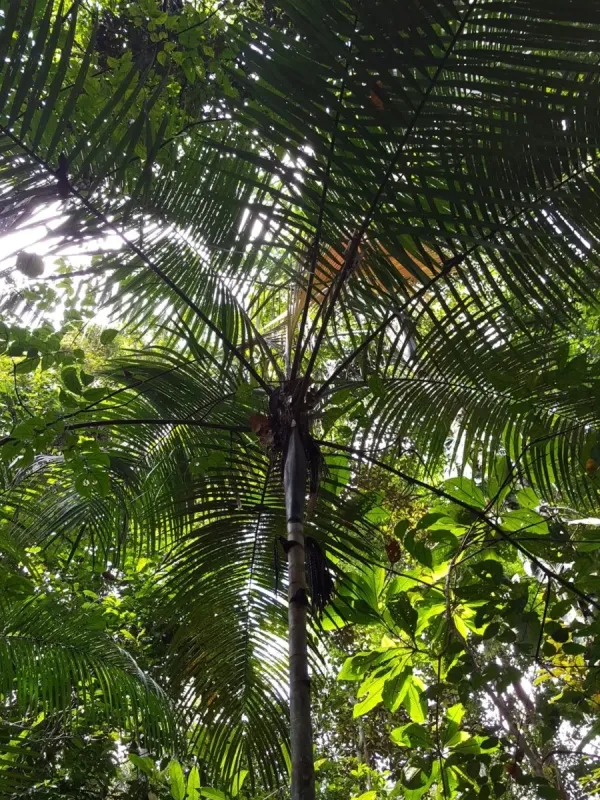
Description
Sowing dates
Propagation of Oenocarpus minor is primarily achieved through seeds. Freshly harvested seeds exhibit high germination energy but require the maintenance of consistently high substrate moisture levels.
Sowing should be performed in specialized containers with well-drained soil, keeping the ambient temperature in the range of 25–30 degrees Celsius. It is crucial to protect seedlings from direct sunlight during the early stages of development.
Transplanting young plants to their permanent location is performed after the formation of 3–4 true leaves. Extreme care must be taken when handling the root system, as palms of this species are sensitive to root damage.
The optimal distance between planted specimens ranges from 5 to 7 meters, which provides sufficient space for the development of the crown and root system of the mature plant.
Under natural habitat conditions, seeds germinate in the leaf litter of the tropical forest; therefore, mulching the base of the plant with organic residues is recommended during cultivation.
Growing requirements
Oenocarpus minor belongs to the Arecaceae family and is a typical representative of the Amazonian rainforest flora. The crop has strict requirements for high humidity levels and consistently warm climatic conditions.
The plant prefers deep, organic-rich loamy soils with good drainage properties. The soil pH level should ideally be in the slightly acidic to neutral range.
The crop is shade-tolerant during early stages, but for full fruit production, mature specimens require sufficient amounts of diffused sunlight.
Optimal annual rainfall for the successful growth of Oenocarpus is at least 2000–2500 mm. The plant does not tolerate prolonged drought periods and cannot withstand even short-term frosts.
For intensive cultivation, the application of complex organic fertilizers during the active growing season is recommended to significantly improve the development of foliage and reproductive organs.
Yield
The yield of Oenocarpus minor is determined by planting density and the plant's water availability during critical flowering stages. The fruits are small drupes clustered in large bunches.
From one mature palm, under proper care, a significant volume of fruit can be harvested, which is highly valued for its content of high-quality vegetable oils and antioxidants.
Fruiting frequency can vary, but with optimal agronomic practices, the crop is capable of providing stable annual harvests for many decades.
Fruit weight and chemical composition depend directly on the microclimatic conditions of the plantation and the age of the plant, with maximum values typically reached between 10 and 15 years.
The economic efficiency of the crop is based on the comprehensive use of fruits, which are processed into edible oil comparable in quality to the oil of Oenocarpus bacaba.
Main diseases and pests
The main threats to the crop are fungal diseases of the root system, which arise due to waterlogging or poor drainage on the plantation.
Among pests, various species of palm weevils are the most dangerous, as their larvae can damage the growing point, often leading to the death of the entire plant.
The foliage can be attacked by mites and scale insects in conditions of insufficient air humidity, which negatively affects the photosynthetic activity of the palm.
To prevent the spread of pathogens, regular sanitary pruning of dry leaves and monitoring of the base area are recommended.
The use of insecticides and fungicides should be strictly regulated and carried out in accordance with environmental standards, considering the sensitivity of palms to chemical stress.
Harvesting
Harvesting Oenocarpus minor is a labor-intensive process due to the height of the mature plant's trunk, which can reach several meters.
Fruit harvesting is performed at the moment of biological maturity, determined by the change in exocarp color to dark purple or almost black.
Bunches are cut using specialized tools with long handles to avoid damage to the palm's vegetative organs and to ensure the preservation of the fruits.
After harvesting, the fruits require rapid processing, as the oils they contain are prone to quick oxidation at high ambient temperatures.
Transportation of harvested fruits is carried out in ventilated crates to prevent overheating and spoilage before oil extraction or processing for food purposes.