
Oenocarpus bacaba
Oenocarpus bacaba
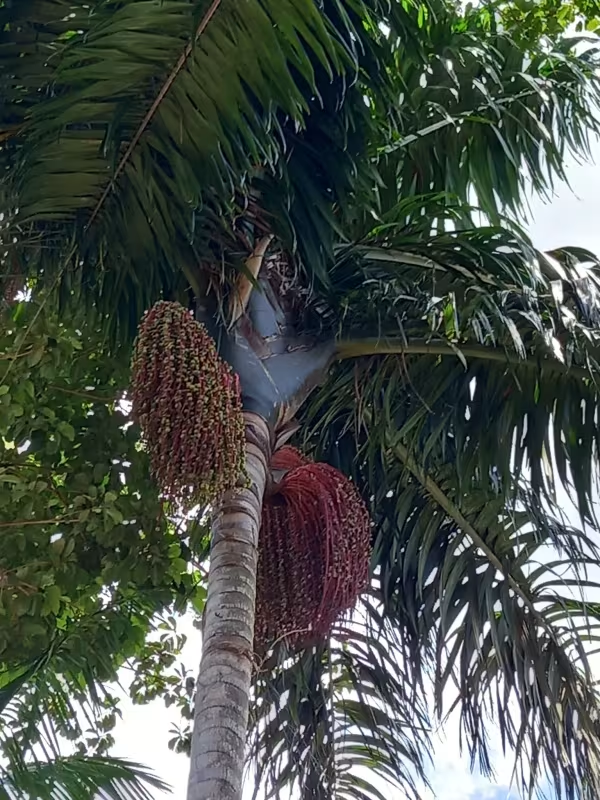
Description
Sowing dates
Oenocarpus bacaba is a majestic palm species native to the tropical forests of the Amazon basin, belonging to the Arecaceae family.
Propagation is primarily achieved through seeds, which must be sown immediately after harvesting because they quickly lose their viability due to desiccation.
For successful germination, seeds require a warm environment with temperatures maintained between +25 °C and +30 °C, along with consistent humidity.
In nursery settings, seeds are planted in organic-rich, loose substrates where they grow slowly, requiring careful management during the initial developmental stages.
Seedlings remain in nurseries for up to a year, benefiting from shade protection before being transplanted into established agroforestry systems or plantations.
Growing requirements
The culture thrives in tropical climates characterized by high annual rainfall and the absence of a long, dry season, mirroring its native Amazonian habitat.
Well-drained, deep, and slightly acidic soils are ideal for this palm, as they provide the necessary nutrient profile and physical structure for root health.
While young palms require significant shade, mature specimens perform best under full sunlight, which is essential to drive the energy-intensive process of fruit production.
The species is extremely sensitive to cold temperatures and cannot survive frost, effectively restricting its commercial cultivation to equatorial regions.
Effective water management is critical; although the plant loves moisture, stagnant water in the soil can lead to root rot and other physiological stressors.
Yield
The economic value of Oenocarpus bacaba centers on its fruits, which grow in large clusters and are prized for their nutrient-dense pulp and high-quality oil.
The plant typically begins its reproductive phase between 6 and 10 years of age, necessitating a long-term investment horizon for growers.
A single mature tree can produce a substantial yield, often totaling several dozens of kilograms of fruit annually depending on soil and climatic conditions.
The oil extracted from the fruit is chemically similar to olive oil, making it an attractive sustainable alternative for food and cosmetic industries.
Beyond oil extraction, the fruit is traditionally used by local communities to produce flavorful, energy-dense beverages that are staples in regional diets.
Main diseases and pests
The primary threats to Oenocarpus bacaba plantations include various insect pests that target the inflorescences and young fruit, resulting in yield losses.
Fungal infections are a significant concern, particularly in high-humidity environments where poor airflow can exacerbate the spread of pathogens on leaves and trunks.
In uncontrolled environments, small mammals and rodents pose a threat by consuming fallen seeds, which hinders natural regeneration processes.
Anthropogenic pressure, including habitat destruction and forest clearing for logging or cattle grazing, continues to endanger wild populations of the species.
Lack of standardized agricultural protocols for pest management remains a barrier for large-scale production, leaving many plantations vulnerable to outbreaks.
Harvesting
Harvesting Oenocarpus bacaba is a labor-intensive operation that requires specialized skills because the fruit clusters are positioned high in the palm canopy.
Workers must either climb the trees or use extended tools to carefully sever the heavy clusters without damaging the palm's terminal bud.
Timing the harvest is crucial, as growers monitor the skin color of the fruits, waiting for the transition from green to deep purple or black to ensure peak oil content.
Post-harvest handling is time-sensitive, as the fruit begins to degrade quickly in the tropical heat, requiring rapid transport to processing facilities.
- Manual cutting of fruit bunches from the canopy
- De-stemming the fruit clusters
- Cleaning and washing to remove debris
- Grading fruit by size and maturity
- Processing for pulp and oil extraction