
Odontonema tubaeforme
Odontonema tubaeforme
Description
Growing requirements
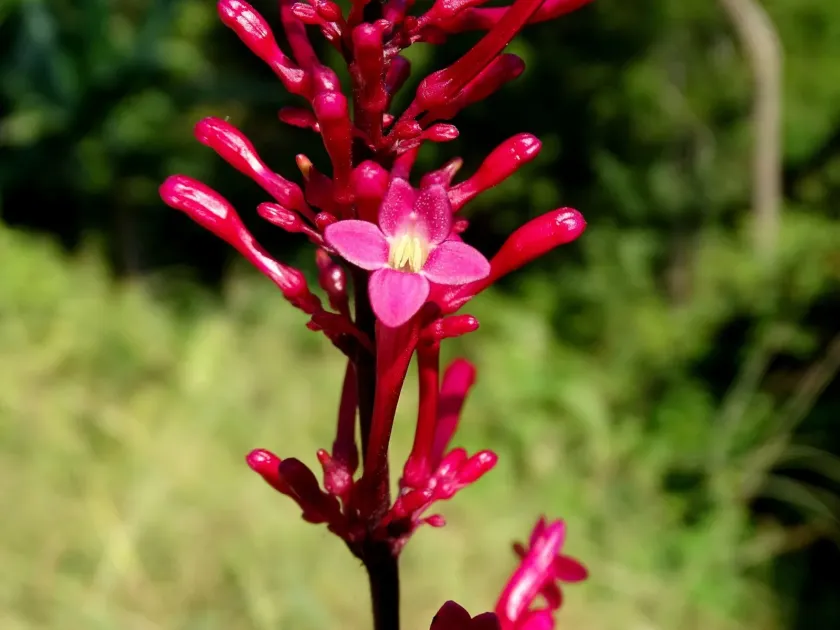
Odontonema tubaeforme, commonly known as the Fire Spike, is an evergreen perennial shrub belonging to the Acanthaceae family. Originating from the tropical regions of Central America, it is prized for its long, tubular, bright red flowers that add significant ornamental value.
The plant thrives in warm tropical or subtropical conditions with temperatures consistently between 20°C and 25°C. It is highly sensitive to frost, which makes it suitable only for greenhouse or indoor environments in regions with cold winters.
Soil requirements for Odontonema include a well-draining, nutrient-rich substrate. A blend of peat moss, pine bark, and perlite provides the ideal balance of moisture retention and aeration required to prevent root suffocation.
Exposure to bright, filtered light is essential for optimal flower production. While the plant can tolerate partial shade, insufficient light will lead to sparse foliage and a reduction in the intensity of the bloom, as well as weak, etiolated stem growth.
Agricultural management of this species involves consistent watering schedules and high humidity levels. During the active growing season, regular irrigation is necessary, ensuring the top layer of soil dries slightly before the next watering cycle to maintain overall health.
Main diseases and pests
Spider mites are the most common pest affecting Odontonema tubaeforme, especially in indoor environments where the air humidity is relatively low. These tiny pests suck sap from the leaves, causing stippling and eventual yellowing of the foliage.
Mealybugs are another potential threat, frequently found in the leaf axils and along the stems. Their presence leads to stunted growth and the development of sooty mold, which grows on the honeydew secreted by these insects.
Root rot caused by Phytophthora or Pythium species is a severe risk if drainage is inadequate. Managing soil moisture and using sterilized containers are the primary methods for preventing this devastating fungal infection.
Leaf spot diseases often occur when the foliage remains wet for prolonged periods in poorly ventilated spaces. Reducing overhead watering and improving air circulation can significantly decrease the incidence of these fungal leaf pathogens.
Effective pest management relies on early detection and the use of integrated pest management (IPM) practices. Regular monitoring of the plant's health allows for rapid intervention with biological or chemical controls before an infestation becomes unmanageable.