
Odontonema rutilans
Odontonema rutilans
Description
Growing requirements
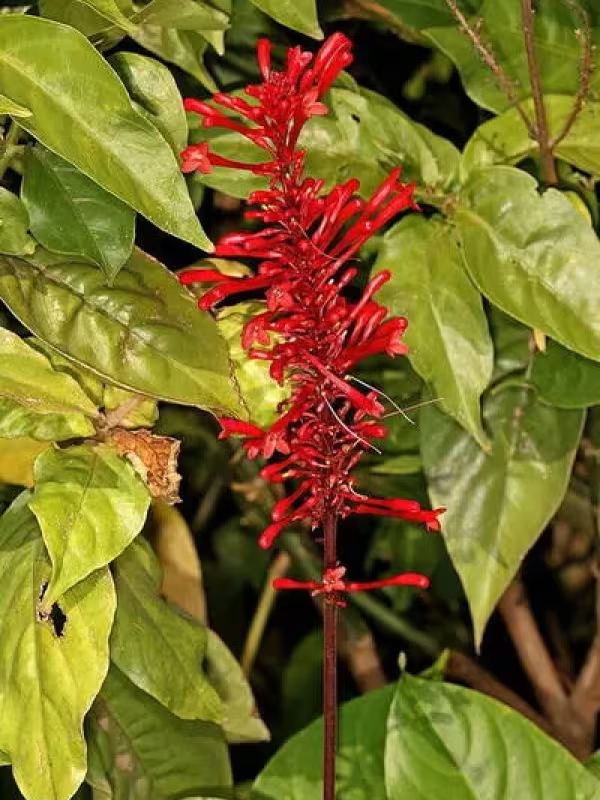
Odontonema rutilans, commonly known as Fire Spike, belongs to the Acanthaceae family. This evergreen shrub is native to the tropical forests of Central America and is widely recognized for its vibrant, candle-like red inflorescences.
The crop thrives in tropical environments, requiring temperatures between +20°C and +30°C. It is highly sensitive to cold and frost, which limits its outdoor cultivation to frost-free regions or controlled greenhouse conditions.
Soil requirements for this plant include a well-draining, nutrient-rich potting mix with high organic matter content. Maintaining a slightly acidic to neutral pH is crucial for optimal nutrient uptake and overall plant vigor.
Lighting conditions are critical for successful blooming. Odontonema rutilans prefers bright, indirect sunlight throughout the day. Excessive shade results in leggy stems, while direct, scorching sun can damage the foliage significantly.
Cultural management involves high air humidity and consistent moisture. During the active growing season, irrigation must be thorough, ensuring that the soil remains damp but never waterlogged to avoid root suffocation.
Main diseases and pests
Common pests include spider mites, which thrive in low-humidity environments. These mites cause stippling on the leaves and can lead to premature leaf drop if not addressed with frequent misting or appropriate acaricides.
Mealybugs are another frequent threat, often found clustering in leaf axils. Physical removal or the application of horticultural oils is recommended to manage populations before they cause significant damage to new growth.
Fungal diseases, such as root rot, are primarily caused by overwatering or poor drainage systems. Preventive measures include using sterilized soil and ensuring pots have sufficient drainage holes for water escape.
Leaf spot diseases may occur under conditions of high humidity and poor air circulation. Effective control involves pruning infected leaves and applying copper-based fungicides when environmental conditions favor disease development.
Integrated pest management (IPM) is highly recommended for commercial greenhouses to minimize chemical usage while maintaining plant health. Regular monitoring is the most effective tool to prevent major outbreaks.