
Odontonema callistachyum
Odontonema callistachyum
Description
Growing requirements
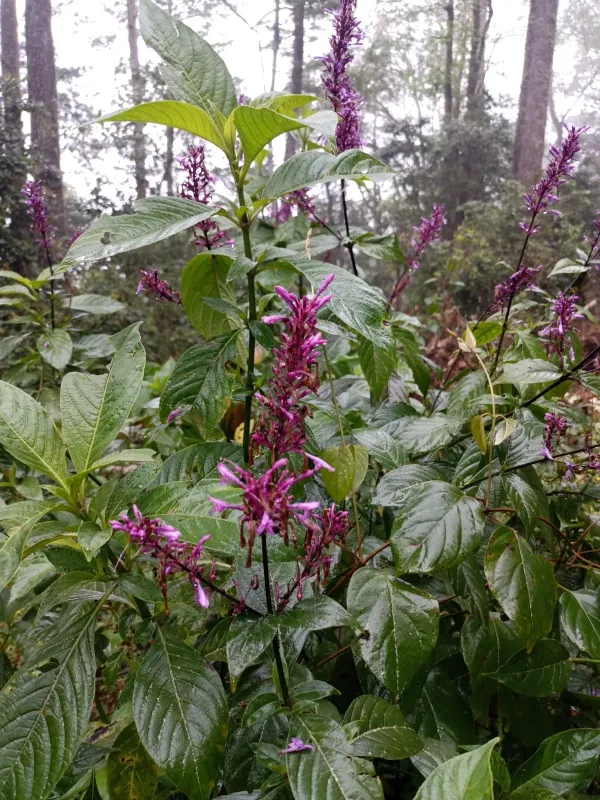
Odontonema callistachyum is a striking perennial shrub belonging to the Acanthaceae family. Known for its tall, slender flower spikes, it is widely appreciated in tropical and subtropical regions for its ornamental value and ability to attract pollinators to the garden landscape.
Originating from Central America and Mexico, this species thrives in warm and humid environments. It is not frost-tolerant, which dictates its use as a greenhouse or indoor ornamental in regions outside of its natural tropical distribution range.
Cultivation requires well-draining, nutrient-rich soil that retains moisture without becoming waterlogged. A mixture of loam, peat, and organic compost is usually recommended to ensure healthy root development and sustained growth throughout the season.
The plant performs best under bright, filtered sunlight. Exposure to direct, intense sun can cause leaf scorch, while deep shade will significantly hinder flowering and cause the stems to become weak and leggy, reducing the plant's overall structural integrity.
Agricultural management involves consistent watering during the growing season and the application of balanced liquid fertilizers. Periodic pruning is essential to maintain a bushy shape, encourage lateral branching, and prepare the plant for the next blooming cycle.
Main diseases and pests
The primary pests affecting Odontonema callistachyum include spider mites, mealybugs, and aphids. These insects tend to colonize the undersides of the leaves, drawing sap and causing stunted growth and yellowing of the foliage if left uncontrolled.
Root rot is a significant concern in environments where drainage is inadequate or irrigation cycles are too frequent. This condition is often caused by pathogenic fungi that proliferate in stagnant, wet soil conditions, eventually leading to plant collapse.
Integrated pest management strategies involve maintaining optimal air circulation and relative humidity to discourage pest infestations. If pests are detected, targeted applications of horticultural oils or organic insecticidal soaps are effective methods of control.
Fungal issues should be addressed by improving soil aeration and adjusting watering habits. In severe cases, the application of systemic fungicides is required to stop the spread of infection within the vascular system of the shrub.
Routine inspection of the plant's leaves and stems is the best way to prevent widespread damage. Early detection allows for mechanical removal of pests and immediate adjustment of growing conditions, ensuring the plant remains healthy and vibrant.