
Neolitsea cassia
Neolitsea cassia
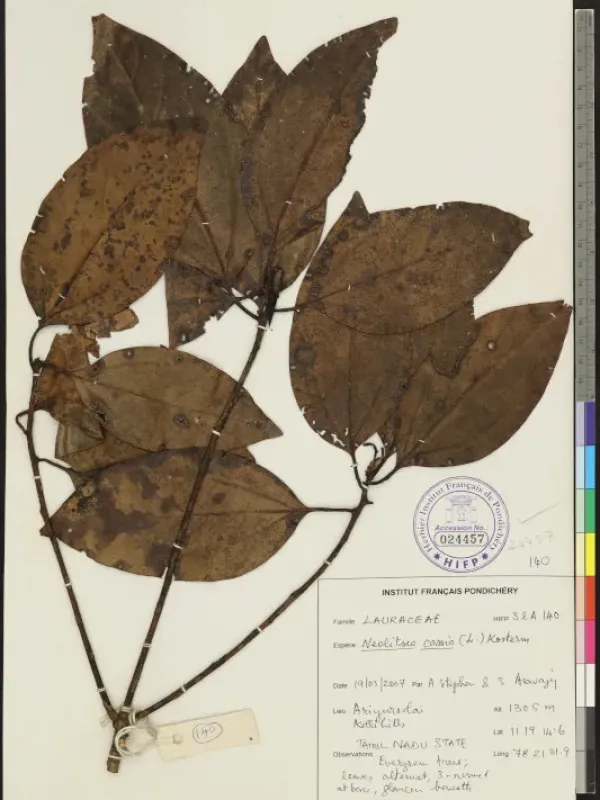
Description
Growing requirements
Neolitsea cassia is a perennial evergreen plant species belonging to the Lauraceae family. It is primarily identified as a small to medium-sized tree found in specific tropical ecosystems.
The plant thrives in warm, tropical climates and lacks cold hardiness. It is essential to protect the trees from any temperatures approaching freezing to maintain their structural integrity.
Soil requirements involve a well-draining, nutrient-rich medium with an acidic to neutral pH level. It does not tolerate compacted soils that promote water retention.
High relative humidity is necessary for optimal development. In cultivated plantations, supplemental irrigation is often used to ensure constant soil moisture levels throughout the year.
The trees perform best in dappled shade or partial sunlight. Exposure to harsh, direct sunlight during the early stages of growth can damage the foliage and stunt development.
Harvesting
The primary economic focus of Neolitsea cassia is the production of essential oils. These oils are extracted from the bark and leaves through distillation processes.
The active compounds found in the bark are highly valued in both traditional medicine and modern pharmacology for their antiseptic and anti-inflammatory properties.
Harvesting strategies involve systematic pruning of the canopy, which allows for regular biomass yield without killing the trees, provided a sustainable rotation is followed.
The timing of the harvest is critical; active essential oil synthesis typically peaks during specific seasons, requiring careful monitoring by agricultural technicians.
Post-harvest processing involves immediate drying or direct extraction to prevent the degradation of volatile chemical components essential for commercial applications.