
Myristica sulcata
Myristica sulcata
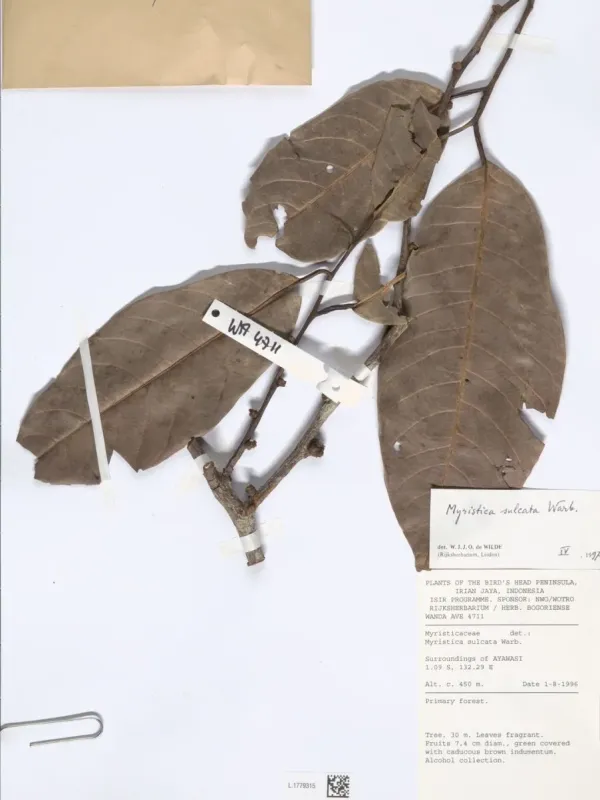
Description
Growing requirements
Myristica sulcata is a distinctive evergreen tree belonging to the Myristicaceae family. It is a tropical species closely related to the commercial nutmeg, known for its unique botanical profile and specific environmental adaptation patterns.
The plant originates from the dense tropical forests of Southeast Asia, where it thrives in environments with high annual rainfall and consistent, warm temperatures. It is highly sensitive to frost and does not tolerate significant climate fluctuations, making it suitable only for tropical regions.
Botanically, the tree features a robust canopy and specialized fruit structure. In cultivation, it performs best when provided with shade in its juvenile stage to mimic its natural understory habitat. Mature trees require sufficient space for root system development.
Optimal soil for Myristica sulcata should be deep, fertile, and possess excellent drainage properties. While the plant requires constant moisture, it strictly avoids waterlogged conditions, which can lead to rapid root decay and plant mortality.
The economic value of this crop lies in its seeds and oils. The industry utilizes these parts for essential oil extraction and as niche ingredients in spice blends. Sustainable management of these trees is essential for maintaining consistent yield and fruit quality over time.
Main diseases and pests
Disease management in Myristica sulcata focuses on fungal control, particularly root rot and leaf blight caused by excessive moisture and poor air circulation. These pathogens can cause severe damage to the tree's vascular system if not addressed quickly.
Pest populations that typically threaten the crop include various scale insects and mealybugs. These pests feed on the nutrient-rich sap of the plant, weakening the tree and making it more susceptible to opportunistic secondary infections.
Cultural control methods involve regular pruning of dead or diseased branches to maintain a clean canopy. This improves light penetration and airflow, significantly reducing the moisture levels required by fungal spores to thrive.
Integrated Pest Management (IPM) practices are highly recommended, involving the introduction of natural predators to control insect outbreaks without relying solely on chemical intervention, which may negatively affect the product quality.
Strategic monitoring of the grove during the transition from the rainy to the dry season is vital. Early detection of leaf discoloration or wilting can prevent small outbreaks from becoming major plantation losses.