
Myristica maingayi
Myristica maingayi
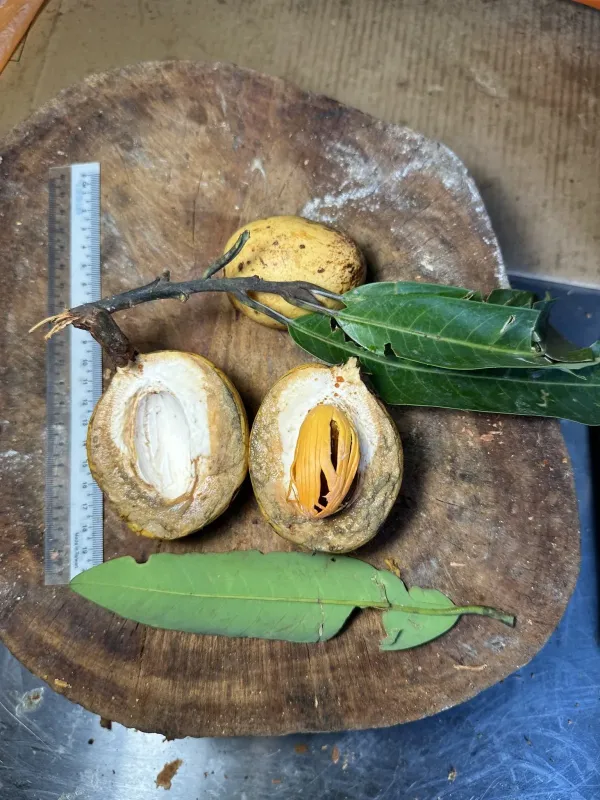
Description
Growing requirements
Myristica maingayi is a prominent member of the Myristicaceae family, known for its status as an evergreen tree species native to the lush tropical rainforests of Southeast Asia. Its physiological adaptations make it highly suited to stable, equatorial ecosystems.
The climate requirements for this species are strict, demanding consistently high temperatures throughout the year. It does not tolerate cold exposure, and even mild frost or temperatures below 15 degrees Celsius can cause significant physiological distress to the plant.
Soil quality is paramount for the cultivation of Myristica maingayi. It thrives best in deep, fertile, and well-drained loamy soils rich in organic matter. Waterlogging must be avoided at all costs, as the roots are highly susceptible to rot under anaerobic conditions.
Adequate moisture levels are critical, typically requiring a high annual rainfall or an efficient irrigation system. Humidity must remain elevated, which helps maintain turgor pressure in the broad leaves and supports active photosynthesis throughout the growth cycle.
Agricultural management includes regular soil enrichment using compost or organic-based fertilizers to replace nutrients extracted during fruit production. Pruning is often employed to manage tree height and improve airflow through the canopy, which also helps in disease mitigation.
Harvesting
The harvest of Myristica maingayi involves the careful collection of fruits once they reach a state of physiological maturity. The process is time-sensitive, as the aril quality is peak only for a short period before degradation begins.
Due to the specific structure of the fruit, hand-harvesting remains the industry standard. Workers identify mature fruits based on subtle changes in rind color and the characteristic scent emitted as the fruit reaches ripeness.
Post-harvest handling is a multi-step process: fruits are opened, the seeds (nutmeg) and the arils (mace) are separated carefully to avoid bruising. Immediate processing is required to prevent moisture retention which can lead to rapid fungal growth.
Drying is the final essential step, often conducted in climate-controlled environments or specialized sun-drying racks. This reduces the moisture content to levels suitable for long-term storage and export, concentrating the aromatic essential oils.
The economic utilization focuses on the spice trade, where the high-quality arils and seeds are processed for food flavoring and extraction of volatile oils. Proper packaging is mandatory to preserve the essential oil content against oxidation and environmental degradation.