
Myristica hypargyraea
Myristica hypargyraea
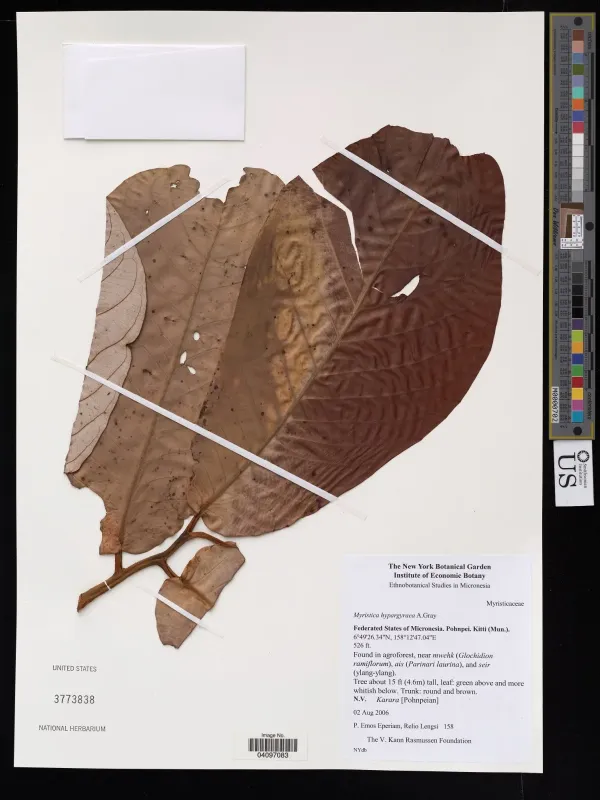
Description
Growing requirements
Myristica hypargyraea is a distinct species belonging to the Myristicaceae family. It is a tropical evergreen tree that requires highly specific environmental conditions to thrive and reach maturity.
The species naturally occurs in tropical regions with high rainfall and consistent temperatures throughout the year. It lacks cold tolerance, making it strictly suitable for equatorial climates where the temperature remains above +20°C.
Cultivation requires deep, well-draining soils rich in organic matter. Proper drainage is essential as the root system is highly sensitive to waterlogging, which often leads to root collar rot in tropical plantations.
The agronomic management of this crop involves maintaining canopy cover for young seedlings to protect them from excessive direct solar radiation until they establish themselves as canopy-layer trees.
Commercially, the species is valued for its biological properties and the production of aromatic seeds, which are studied for their potential use in the essential oil and pharmaceutical industries.
Main diseases and pests
The primary threats to Myristica hypargyraea include fungal pathogens that exploit the high-humidity environment of tropical plantations to infect leaves and stems.
Insect pests, specifically scale insects and wood-boring beetles, pose a recurring challenge by attacking the bark and foliage, leading to a decline in tree vigor.
Soil-borne pathogens such as Phytophthora species are highly destructive when cultivation occurs in heavy, poorly aerated soils that retain excess water for long periods.
Leaf-eating caterpillars can cause significant defoliation during the peak growth season, which directly reduces the plant's capacity for photosynthesis and nutrient storage.
Effective management includes regular pruning to improve airflow, integrated pest management (IPM) to control insect populations, and ensuring optimal soil nutrition to boost the tree's natural defense systems.