
Watermilfoil
Myriophyllum L.
Watermilfoil (genus Myriophyllum) belongs to the Haloragaceae family and encompasses a wide range of submersed aquatic plants. These species are found in freshwater habitats worldwide, ranging from stagnant ponds to flowing streams, serving as vital oxygenators and habitats for aquatic life.
What the section contains

Watermilfoil
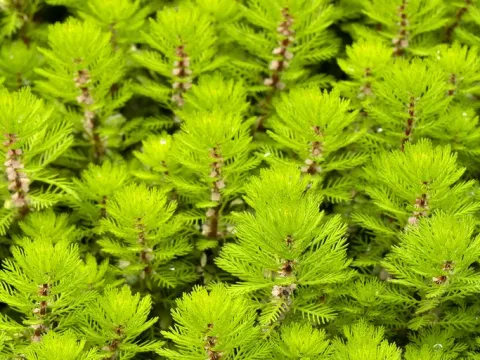
The botanical structure consists of delicate, feathery, whorled leaves attached to slender, elongated stems. These plants are uniquely adapted to aquatic environments, possessing aerenchyma tissue in their stems that facilitates gas exchange even in oxygen-deprived sediments.
Successful cultivation of Myriophyllum requires a stable aquatic environment with consistent water parameters. Optimal temperature ranges typically fall between 18°C and 26°C. While some species are temperate and frost-hardy, others require tropical conditions to maintain healthy growth rates.
Light intensity is a primary agronomic factor for watermilfoil. It thrives under high-intensity, full-spectrum lighting, which encourages compact, lush growth. If light levels are insufficient, the plant becomes leggy, loses its vibrant color, and eventually undergoes senescence.
Regarding substrate, the plant adapts well to fine-grained sediment or mineral-based aquatic soil. It is highly efficient at nutrient uptake, specifically nitrogen and phosphorus, which makes it a preferred biological tool for managing nutrient loads in aquaponics and water treatment systems.
Algal blooms pose the most significant threat to the health of watermilfoil. Epiphytic algae attach to the fine foliage, blocking light and stifling gas exchange. This often occurs when water chemistry is imbalanced or when nutrient levels are too high compared to the plant's uptake capacity.
Pests such as aphids can affect floating or emergent parts of the plant during warmer months. Additionally, certain types of snails and crustaceans may graze on the soft, succulent stem tips, causing stunted growth and irregular branching patterns.
Fungal infections typically arise from physical trauma to the stems, which can occur during handling or rapid changes in water temperature. Once the integrity of the stem is breached, pathogens can easily colonize, leading to localized necrosis and eventual plant decay.
Nutrient deficiency, specifically iron or CO2 starvation, is a frequent management hurdle. These deficiencies lead to chlorosis and the disintegration of leaf structures. Regular monitoring of water quality and consistent fertilizing regimes are necessary to mitigate these issues.
Invasive management is an essential aspect of watermilfoil care, especially for certain species. Because of their rapid vegetative reproduction, they can form dense mats that impede water flow and sunlight penetration, requiring aggressive manual removal to maintain the intended aquatic balance.