
Salty water-milfoil
Myriophyllum salsugineum
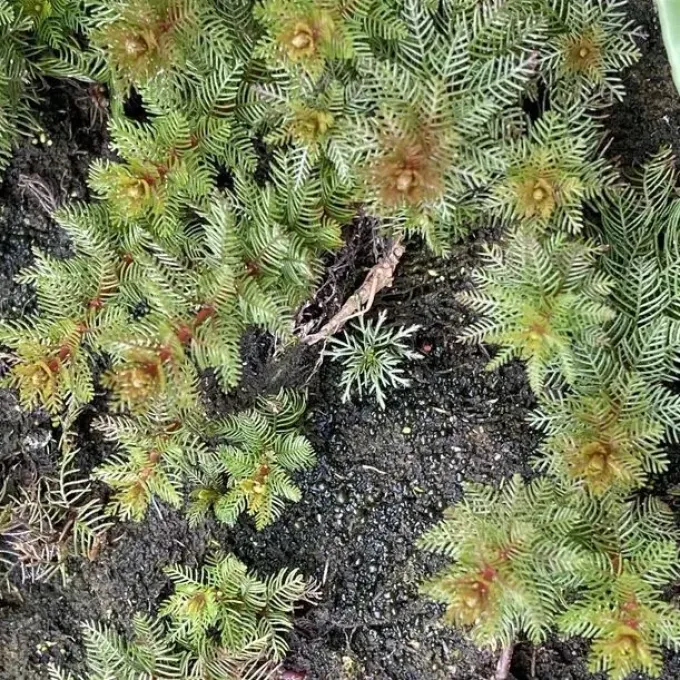
Description
Growing requirements
Salty water-milfoil (Myriophyllum salsugineum) is a perennial aquatic plant belonging to the Haloragaceae family. It is distinct due to its evolutionary adaptation to brackish water environments.
The plant exhibits a submerged growth habit, featuring feathery, whorled leaves that are highly efficient at nutrient absorption directly from the water column. Its root system is anchored in benthic sediments to provide mechanical stability.
Optimal growth depends on specific salinity levels, which mimic natural estuarine conditions. These plants perform best in environments where water salinity ranges from low to moderate, ensuring osmotic balance within the plant tissues.
Light availability is a primary factor for the development of healthy biomass. In clear, shallow waters with sufficient light penetration, the plant can form dense underwater meadows that serve as an important habitat for aquatic fauna.
Cultivation requires careful monitoring of water parameters. Ensuring stable temperatures and a balanced supply of inorganic nutrients is crucial for maintaining the vigor and growth rates of this species.
Main diseases and pests
Anthropogenic pollution, particularly nitrogen and phosphorus runoff, remains a significant threat. Excessive nutrient loading triggers algal blooms that compete with the milfoil for light and dissolved oxygen.
Invasive aquatic species often threaten the niche of Myriophyllum salsugineum, outcompeting it for physical space and substrate resources in disturbed or unstable aquatic ecosystems.
Various mollusks and insect larvae may feed on the tender parts of the plant. These herbivores can cause significant damage if populations grow out of balance, exposing the plant to secondary infections.
Waterborne pathogens and fungi represent a constant risk, especially when the plant is stressed by fluctuating water levels or poor water circulation in shallow ponds.
Physical disruption, such as dredging or intensive watercraft usage, can destroy entire colonies by uprooting the plants and increasing water turbidity, which further inhibits regrowth.