
Slender watermilfoil
Myriophyllum tenellum
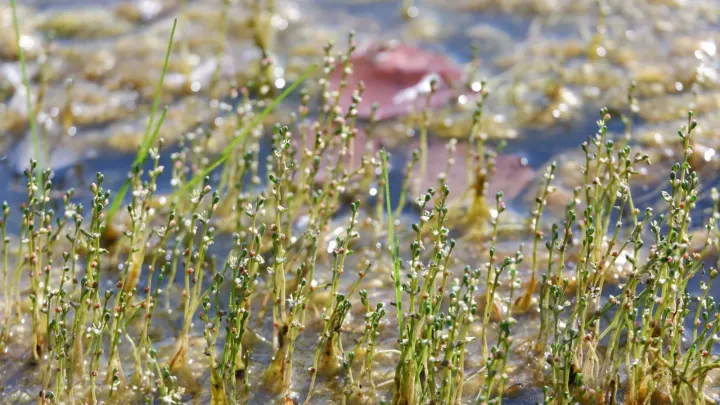
Description
Growing requirements
Slender watermilfoil (Myriophyllum tenellum) is a perennial aquatic plant species belonging to the Haloragaceae family. Unlike many other watermilfoils, this species is characterized by a diminutive, stem-like structure without fully developed compound leaves, which gives it a unique, grass-like appearance in its natural submerged habitat.
Originating primarily from North America, this plant is typically found in the sandy substrates of lake shores, ponds, and shallow river banks. It thrives in environments where water transparency is high, allowing for sufficient photosynthesis to occur throughout the entire length of the plant's delicate stems during the active growing season.
Regarding climate and habitat requirements, Slender watermilfoil prefers temperate zones with stable water temperatures. It is highly sensitive to water turbidity; therefore, it requires clear, well-oxygenated water to maintain its physiological functions. Proper water circulation is essential to ensure the constant supply of nutrients and dissolved carbon dioxide.
The substrate for this culture should be nutrient-rich yet porous to facilitate root development. In both wild and controlled environments, the plant relies on a balanced concentration of nitrogen and phosphorus to sustain its growth. It is essential to avoid using heavy, clay-based soils that may lead to root rot if the substrate becomes anaerobic.
Economically and ecologically, Slender watermilfoil is valued for its contribution to water purification. By actively absorbing excess nitrates, the plant helps mitigate the risk of algal blooms in small water bodies. It is also an essential component for aquatic restoration projects and specialized aquascaping layouts aimed at recreating naturalistic, pristine underwater landscapes.
Main diseases and pests
The primary threats to Slender watermilfoil populations include invasive filamentous algae and changes in water chemistry caused by pollution. Additionally, excessive siltation can bury the plant, preventing light penetration and leading to rapid decline. Monitoring for pathogenic bacterial outbreaks in high-density patches is also a standard management practice.