
Parrot feather
Myriophyllum aquaticum (Vell.) Verdc.
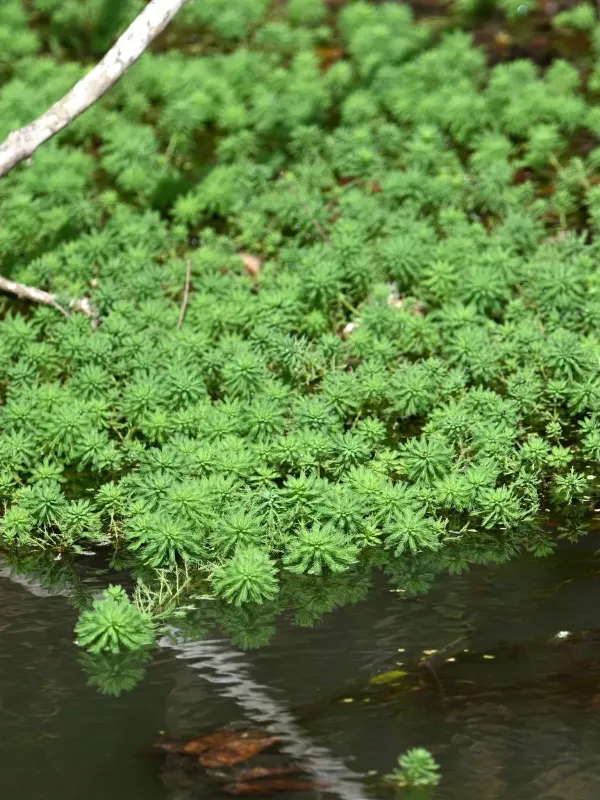
Description
Growing requirements
Parrot feather (Myriophyllum aquaticum) is a perennial aquatic plant belonging to the Haloragaceae family. Native to South America, it has gained popularity worldwide as a decorative element for aquariums and artificial ponds.
This plant thrives under high-intensity lighting, which is crucial for maintaining its distinctive feathery foliage. In its natural habitat, it grows in calm or slow-moving waters, adapting well to nutrient-rich silty environments.
Temperature requirements for optimal development range from 18 to 26 degrees Celsius. Although it can tolerate cooler conditions, growth rate significantly decreases if the temperature drops consistently below 15 degrees Celsius.
Cultivation requires a nutrient-rich substrate, preferably fine-grained, to support root development. While it can absorb nutrients directly from the water column, a fertile soil base promotes faster biomass production.
Due to its high invasive potential in many regions, the cultivation of this species is strictly regulated. Gardeners are advised to keep it contained in isolated ponds to prevent it from entering local water bodies.
Main diseases and pests
Bacterial decay is one of the most common threats to Parrot feather, especially when the plant is mechanically damaged or exposed to poor water quality. Such decay can rapidly spread through the entire colony.
Various aquatic insect larvae and snails can cause significant damage to the soft, delicate stems. Regular inspection and the introduction of natural predators are often used as effective control measures in pond environments.
Algal blooms pose a severe threat, as they cover the feathery leaves, blocking light and stifling photosynthesis. This often leads to the chlorosis and subsequent necrosis of the lower parts of the plant stems.
Sensitivity to certain chemical treatments makes pest management challenging. The plant reacts negatively to many common herbicides and algaecides, which may cause severe leaf drop if applied in incorrect dosages.
Maintaining proper water circulation is vital to preventing the accumulation of debris that can harbor harmful pathogens. Clean, well-filtered water is the key to preventing most common diseases of this aquatic species.