
Whorled watermilfoil
Myriophyllum verticillatum
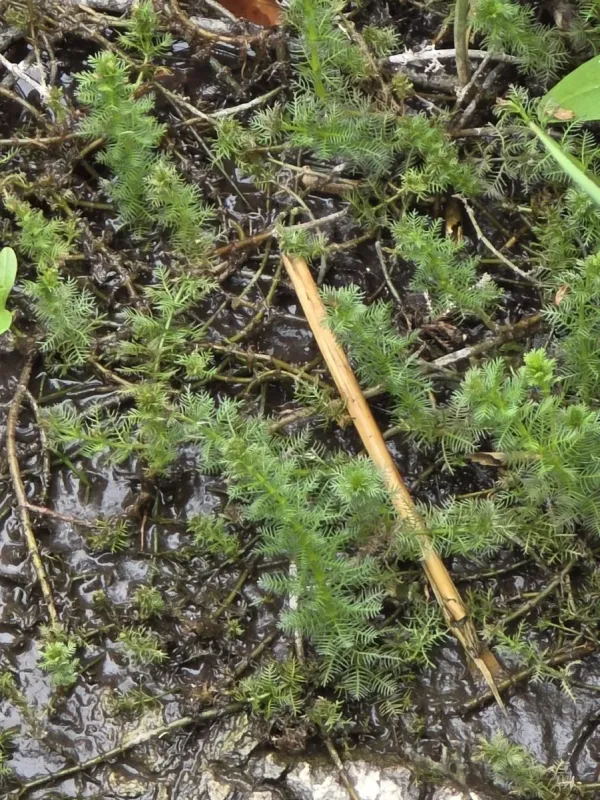
Description
Sowing dates
Whorled watermilfoil is primarily propagated through vegetative reproduction, which is the most reliable method for agricultural and restorative purposes. Cuttings are best harvested and planted during the late spring as water temperatures rise to approximately 15–20 degrees Celsius.
The stems are inserted directly into the substrate or anchored using weighted pots to ensure stability. Adequate spacing between individual plants is essential to promote healthy growth and prevent the rapid depletion of localized nutrients.
While seed production is possible in nature, it is rarely utilized in professional cultivation. Vegetative propagation by stem fragmentation is significantly faster and more consistent, allowing for rapid colonization of the target area.
Upon transplantation, the plant rapidly develops root systems from the nodes, which anchor it firmly to the bottom sediments. Optimal growth is achieved when the plant is introduced to environments with minimal disturbance in the initial stages of root establishment.
Throughout the growing season, the plant continues to branch out, filling the available space. Careful management of these fragments during harvesting ensures that the population remains dense and healthy for the following years.
Growing requirements
Whorled watermilfoil thrives in a variety of aquatic environments, preferring standing or slowly flowing water bodies that are rich in organic and mineral nutrients. It acts as an effective indicator of eutrophic water conditions.
Water depth is a significant factor, with the ideal range being between 0.5 and 2 meters. The plant requires substantial light exposure for photosynthesis, making clarity and transparency of the water columns crucial for robust development.
The preferred substrate consists of silty or sandy-silty bottoms, which provide the necessary anchors and mineral content. A neutral to slightly alkaline pH range is optimal for maintaining the physiological balance of the plant.
Temperature plays a vital role in the growth cycle, with an optimal range between 18 and 25 degrees Celsius. During colder periods, the plant enters dormancy, often forming specialized winter buds known as turions to survive the winter season.
Proper management of the water quality, including adequate dissolved oxygen levels and nutrient cycling, ensures that the whorled watermilfoil can maintain high growth rates and provide ecosystem services.
Yield
The productivity of Whorled watermilfoil is typically measured by its biomass accumulation per unit area. Under optimal nutrient-rich conditions, the plant can achieve very high density, creating substantial underwater meadows.
In aquaculture, this biomass is utilized as a supplemental food source for certain fish species and as a natural spawning substrate. Its ability to regrow rapidly after thinning makes it a highly sustainable resource.
For environmental applications, yield refers to the plant's capacity for phytoremediation, specifically its ability to sequester excess phosphates and nitrates from the water column, thereby improving water quality.
Harvesting is usually conducted via mechanical cutting of the upper biomass. This practice does not only yield useful material but also stimulates the plant to produce new shoots, maintaining an active and youthful population structure.
The production of high-quality vegetative material for restoration projects is also a significant economic aspect of this crop, as demand for native aquatic vegetation for habitat reconstruction continues to grow.
Main diseases and pests
The primary threats to Whorled watermilfoil involve fungal infections and pathogens that thrive in stagnant or polluted water. These infections can lead to stem rot, especially if gas exchange is hampered by high organic debris levels.
Insects and certain gastropods can act as pests, grazing on the soft tissues of the stems and leaves. While natural herbivory is normal, excessive pest populations can weaken the plant and reduce its photosynthetic capacity.
Competition from more aggressive invasive aquatic weeds is a major concern. Without regular maintenance or population control, faster-growing species can easily outcompete and displace the whorled watermilfoil.
Physical damage caused by boat traffic, maintenance equipment, or dredging operations often leaves the plant vulnerable to bacterial and fungal colonization at the wound sites, which can lead to localized die-offs.
Prevention involves maintaining good water circulation and regular monitoring of plant density. Removing excess dead organic matter helps eliminate the niches where pathogens typically survive and propagate during the growing season.