
Muscari armeniacum
Muscari armeniacum Leichtlin ex Baker
Description
Sowing dates
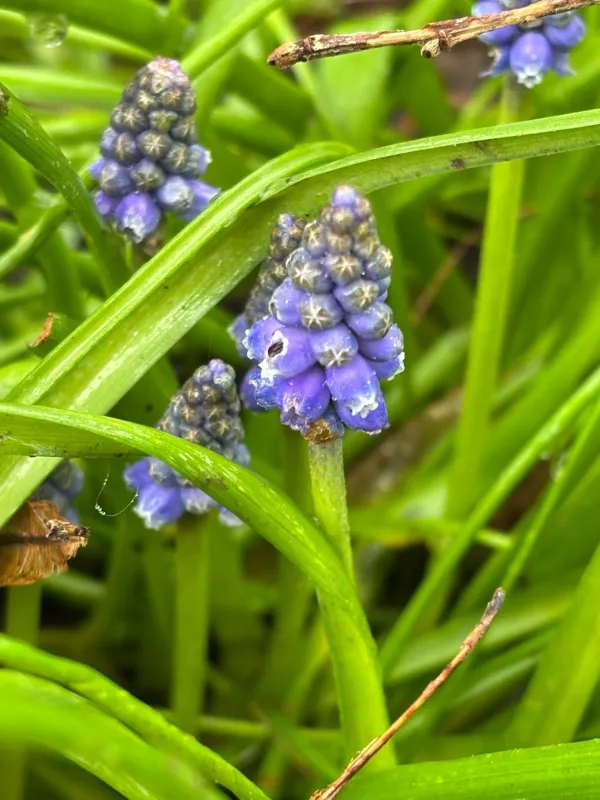
Muscari armeniacum belongs to the Asparagaceae family and is a perennial bulbous plant widely recognized for its vibrant blue, bell-shaped flowers.
Bulbs are typically planted during the autumn season, specifically from late August through October, allowing for adequate root establishment before winter temperatures set in.
When planting, bulbs should be placed at a depth of approximately 5 to 8 cm, with a spacing of 5–10 cm between each bulb to prevent crowding and ensure vigor.
Commercial multiplication of this crop is primarily achieved through the division of offsets or bulblets that develop naturally around the mother bulb during the growing cycle.
While seed propagation is biologically possible, it is rarely utilized in horticultural practice due to the multi-year maturation period required for the plant to bloom.
Growing requirements
This species thrives in locations with full sun to partial shade, requiring a well-drained site to prevent moisture accumulation around the bulb structures.
The ideal soil substrate is loose, fertile, and slightly acidic to neutral, as overly dense or waterlogged soils are detrimental to long-term plant health.
Muscari armeniacum is highly valued for its cold hardiness, making it an excellent candidate for temperate climates where it can survive winter dormancy outdoors.
Adequate moisture is essential during the spring growth phase, but it is critical to reduce watering once the foliage begins to yellow and the plant enters dormancy.
Low-maintenance requirements make it an ideal choice for naturalizing in lawns or rock gardens, provided the soil is not prone to chronic compaction or flooding.
Main diseases and pests
Viral infections, such as onion mosaic virus, present a significant threat, often manifesting as mottled leaves, stunted growth, and distorted flower spikes.
Fungal pathogens including Fusarium and Penicillium rots are common, especially in environments with poor drainage, leading to the decay of the bulb basal plate.
Pests like aphids and spider mites can infest the foliage during the active growing season, potentially weakening the plant and reducing stored energy for the next year.
Bulb mites can also be problematic, especially in stored bulbs, as they feed on the tissues and create entry points for secondary bacterial or fungal infections.
Effective management strategies include sourcing certified disease-free bulbs, ensuring strict sanitation during division, and applying appropriate pesticides when necessary.
Harvesting
Harvesting of the bulbs should only occur after the foliage has fully withered and turned yellow, indicating that the bulb has successfully stored energy for the dormant period.
In most regions, this process occurs in early to mid-summer, marking the end of the plant's vegetative cycle for the season.
After lifting the bulbs from the ground, they must be cleaned of excess soil, cured in a shaded, well-ventilated area, and inspected for signs of damage or decay.
Storing the bulbs requires cool, dry conditions with good airflow to prevent moisture-related rot and to inhibit premature sprouting before the next planting window.
While plants can be left undisturbed for several years, periodic division every 4 to 5 years is recommended to maintain optimal flower size and prevent overcrowding.