
Morina coulteriana
Morina coulteriana
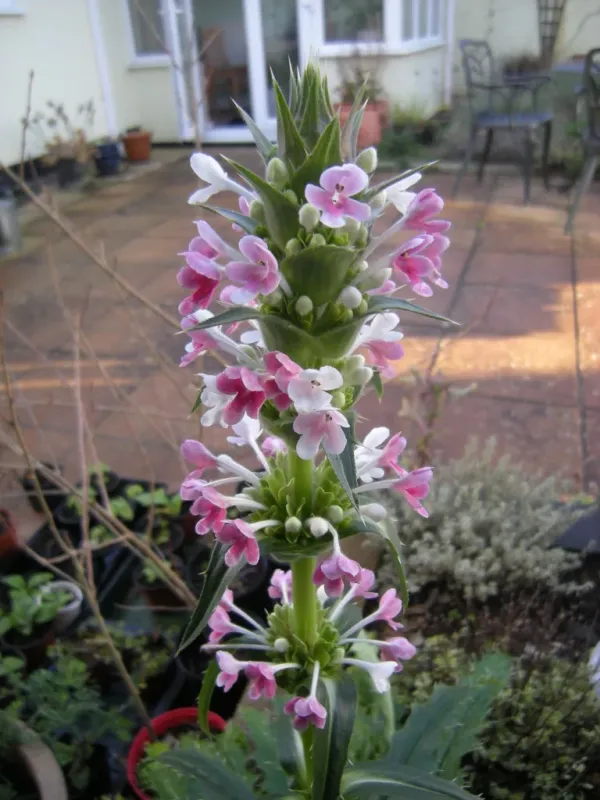
Description
Growing requirements
Morina coulteriana is a perennial herbaceous plant belonging to the Caprifoliaceae family. Native to the high-altitude regions of the Himalayas, it has evolved to thrive in specialized mountain ecosystems.
The cultivation of this species requires well-drained, gritty, and mineral-rich soils. Ensuring that the substrate remains permeable is essential to prevent the accumulation of moisture, which is vital during the dormant season.
This plant demands full sun exposure to maintain its compact habit and vibrant flowering. In shaded conditions, the stems become weak, and the plant loses its distinctive architectural appearance.
Botanically, it is recognized for its spiny, thistle-like basal leaves and unique, whorled inflorescences. The flowers are typically tubular and attract various pollinators, making them valuable for biodiversity in the garden.
In terms of usage, it is primarily an ornamental species. It is a preferred choice for rock gardens, scree beds, and specialized xeriscaping projects where drought tolerance and mountain aesthetics are prioritized.
Main diseases and pests
The most significant threat to Morina coulteriana is root rot caused by poor drainage. Excess water, especially when trapped around the root crown, causes immediate decay of the plant tissue.
Pests such as slugs and snails are problematic during the early growth stages. They target the tender young foliage of the basal rosette, which can severely stunt the plant's development early in the season.
Fungal diseases can occur if there is inadequate air circulation around the plants. High humidity in combination with poor drainage creates an environment favorable for various pathogens that attack the foliage.
Weed competition is a significant threat to the overall vitality of the plant. Since Morina coulteriana is relatively slow-growing, it can be easily overwhelmed by vigorous weeds if the bed is not maintained.
Proactive management includes regular site sanitation and the use of inorganic mulch such as gravel. This mulch helps keep the crown dry and provides a barrier against pests, ensuring the plant's long-term survival.