
Monodora tenuifolia
Monodora tenuifolia
Description
Sowing dates
Monodora tenuifolia is an evergreen tree belonging to the Annonaceae family. In its native tropical African environment, propagation is primarily achieved through seeds, which must be sown immediately after harvest as they rapidly lose their viability.
Successful seed germination requires high soil moisture and ambient temperatures not lower than 25–28 degrees Celsius. The ideal sowing time is at the beginning of the rainy season, when natural light levels promote active development of the seedlings.
In cultivation, it is common to raise seedlings in containers before transplanting them to a permanent location. Providing high-quality drainage is essential to prevent waterlogging, which is critical for the root system of young trees in their early stages.
Planting at the permanent site should follow a spacing pattern that ensures sufficient nutrition area for each individual. Given the mature size of the tree, spacing should be at least 5–6 meters to allow for proper crown formation.
Seedlings require shading during their first few years, as they naturally evolve in the understory of tropical forests under the canopy of taller, mature trees.
Growing requirements
This crop is a classic tropical plant with strict temperature requirements. Monodora tenuifolia cannot tolerate even brief frosts and requires a stable, warm climate throughout the year to thrive.
Soil preferences include well-drained, fertile loams with a high organic content. The soil pH should be near-neutral, which ensures optimal uptake of essential nutrients for healthy tree development.
The plant requires regular irrigation and high atmospheric humidity. During drought periods or when humidity levels drop below 60%, the tree may shed its leaves and experience reduced flowering performance.
An important requirement is protection from strong winds, which can damage brittle branches and large leaves. Plantings should be situated in areas shielded from direct exposure to stormy wind patterns.
Fertilization with complex mineral fertilizers is conducted during the active growth period to support vigorous development and stimulate the formation of flower buds, which emerge on the previous year's shoots.
Yield
The economic value of Monodora tenuifolia is centered on its seeds, which contain essential oils and are prized as a spice. Yield depends on the age of the tree and growing conditions, usually peaking between 8 and 10 years of age.
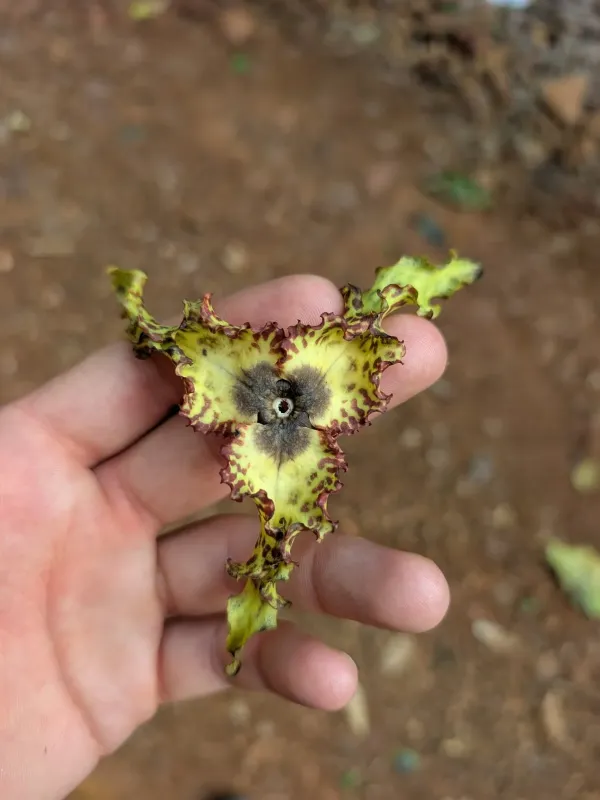
The flowering phase of the plant is highly ornamental, with large, wavy-petaled flowers attracting local pollinators. Successful fruit set largely depends on the activity of these natural pollinators in the region.
The fruits are large, rounded berries containing numerous seeds embedded in aromatic pulp. Once mature, fruits either drop to the ground or are harvested by hand upon visible changes in skin color.
Crop quality is determined by the maturity of the seeds, which are dried after being extracted from the pulp. Properly dried seeds can be stored for long periods without losing their organoleptic characteristics.
Yield from a single mature tree can reach several kilograms of dry raw material, making this crop a viable option for small-scale tropical farming operations.
Main diseases and pests
The primary threats to Monodora tenuifolia include fungal infections that develop under conditions of excessive humidity. Anthracnose on leaves can lead to premature leaf drop and overall weakening of the tree.
Pests such as scale insects and mealybugs frequently attack young shoots and the undersides of leaves. Control methods include biological interventions and the application of systemic insecticides.
Root rot poses a serious danger when irrigation management is poor or drainage is inadequate. Infection can spread rapidly through the root system, causing the plant to perish within a short period.
The tree may also suffer from certain types of weevils whose larvae penetrate the fruit. Preventative treatments during the fruit-set stage help reduce harvest losses and maintain the quality of the produce.
Adherence to standard agronomic practices, such as timely pruning of the crown to improve air circulation, significantly lowers the risk of epidemics and pest infestations.
Harvesting
Harvesting Monodora is a labor-intensive process that requires careful attention to the fruit's maturity. Under-ripe fruits lack sufficient essential oil content, while over-ripe fruits may be damaged upon impact.
A key indicator of harvest readiness is a specific change in the scent of the skin and slight softening of the fruit. Harvesting is conducted by hand-picking fruits from the branches or gathering them from the ground.
After harvest, fruits are cleaned of skin and pulp residues to release the seeds. While the pulp also has potential uses, the seeds remain the primary commercial product of the plant.
Drying is performed in natural shaded conditions to preserve the volatile aromatic compounds, which can be degraded by direct sunlight or high temperatures in industrial drying chambers.
Storage of the finished product is carried out in airtight containers in a cool, dark place, which helps maintain spice quality for 1–2 years without significant changes to the flavor profile.