
Monodora myristica
Monodora myristica
Description
Sowing dates
The propagation of Monodora myristica, a member of the Annonaceae family, is primarily conducted via seeds. In its native tropical African habitat, seeds germinate naturally following the onset of the rainy season, which dictates the ideal planting window for commercial cultivation.
To cultivate this species, mature fruits are harvested, and the seeds are extracted from the aromatic pulp. It is essential to clean the seeds thoroughly and sow them in a nutrient-rich, moist substrate. A constant temperature of 25–30 degrees Celsius is necessary for successful germination.
The seeds possess a hard seed coat, which may require pre-sowing treatments like soaking in water to improve germination rates. Using containers with excellent drainage is crucial to prevent the seeds from rotting in the damp soil environment required for sprouting.
Once seedlings have developed two to three sets of true leaves, they are typically transplanted into larger containers. During this early growth phase, seedlings should be kept in partial shade to avoid damage from intense tropical sunlight.
As the plant has a slow initial growth rate, diligent care in the nursery stage is vital. Ensuring consistent moisture and protection from harsh elements helps establish a robust root system before the young tree is permanently planted in the field.
Growing requirements
Monodora myristica is an evergreen tropical tree that thrives in humid forest environments. It requires a stable tropical climate with high humidity and temperatures that do not fluctuate significantly throughout the year.
The soil must be fertile, deep, and well-drained. The species prefers loamy soils with a slightly acidic to neutral pH. Proper soil structure is essential for root aeration and the prevention of waterlogging, which the plant cannot tolerate.
While the mature tree can tolerate some exposure, it performs best in partial shade. In large-scale plantations, it is common to use shade trees or canopy management to simulate the natural forest conditions and protect the leaves from excessive transpiration.
Regular irrigation is necessary, particularly in areas where rainfall is seasonal. Drought stress can severely limit growth and fruit production, making effective water management a cornerstone of successful Monodora cultivation.
Organic fertilization, such as well-rotted compost, applied to the soil surface helps maintain soil fertility and structure. Mulching around the base of the tree is also highly beneficial for retaining moisture and suppressing competitive weeds.
Yield
The primary economic product of Monodora myristica is its seeds, which are widely traded as a spice known as African nutmeg. Trees typically start their reproductive cycle and begin to produce fruit between 5 to 7 years after planting.
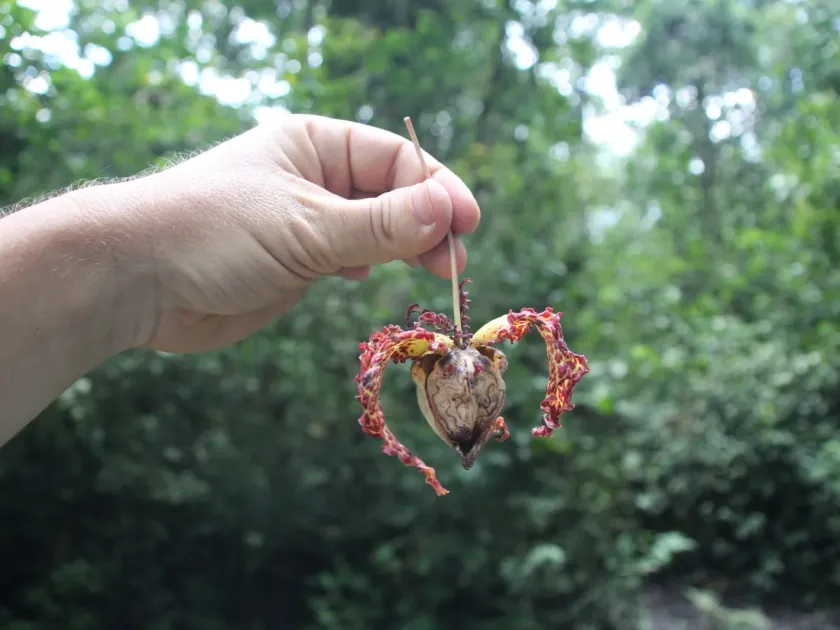
The fruits are large, spherical berries suspended from long, thin stalks. Each fruit contains numerous seeds embedded in a fragrant pulp, which is valued for its unique aroma. The harvest volume depends on the age of the tree and the success of cross-pollination.
Proper management of plantation density and the presence of pollinators are key to maximizing yields. Under ideal conditions, a healthy, mature tree can provide a consistent annual harvest of fruits throughout the peak season.
After harvesting, the processing involves cracking the fruits to extract the seeds. The seeds are then carefully cleaned and dried to lock in the aromatic oils. This post-harvest processing is critical for achieving high-quality spice that is marketable globally.
Beyond the seeds, the plant's timber is sometimes used for local construction, and its attractive, orchid-like flowers are appreciated in agroforestry systems. This makes the species a versatile addition to diverse tropical agricultural landscapes.
Main diseases and pests
Fungal diseases, particularly those affecting the roots, represent the most significant threat to Monodora myristica. Excessive soil moisture often triggers pathogens like Phytophthora, which can cause crown and root rot, leading to tree decline.
Stem borers and other wood-boring insects can weaken the tree's structure and leave it vulnerable to secondary infections. Regular monitoring for sawdust and entrance holes in the bark is essential for early detection and mitigation of these pests.
Leaf-eating insects can cause significant defoliation, which reduces the tree’s photosynthetic capacity and hinders fruit development. Integrated Pest Management (IPM) strategies are recommended to keep pest populations at bay without harming beneficial forest insects.
Nematodes, which inhabit the soil, pose a hidden threat, especially in sandy soils with low organic matter. Maintaining high soil health through organic amendments can help build the plant’s natural resistance against nematode damage.
Maintaining a proactive phytosanitary regime, which includes removing infected parts and ensuring proper spacing between trees, is vital for the longevity and productivity of a Monodora orchard.
Harvesting
Harvesting takes place when the fruits reach physiological maturity. A key indicator is the change in the fruit's rind color and the release of a strong, characteristic scent, signaling that the seeds inside are fully developed.
Harvesting is a manual process that often requires ladders or long poles with cutting attachments, as the canopy of the trees can reach significant heights. Great care must be taken during harvest to avoid damaging the branches that will bear fruit in the following season.
Once harvested, the fruits are processed immediately to extract the seeds. The seeds are thoroughly washed and spread out in shaded, well-ventilated areas to dry slowly. This gentle drying process ensures the essential oils are preserved for maximum flavor.
After drying, the seeds should be sorted and graded based on size and quality. Grading is an essential step in standardizing the product for different segments of the spice market and improving overall profitability.
Finally, the dried seeds are stored in airtight, moisture-proof containers to preserve their aroma and potency. Properly stored seeds can remain flavorful for many months, making them a durable commodity for international trade.