
Monodora junodii
Monodora junodii
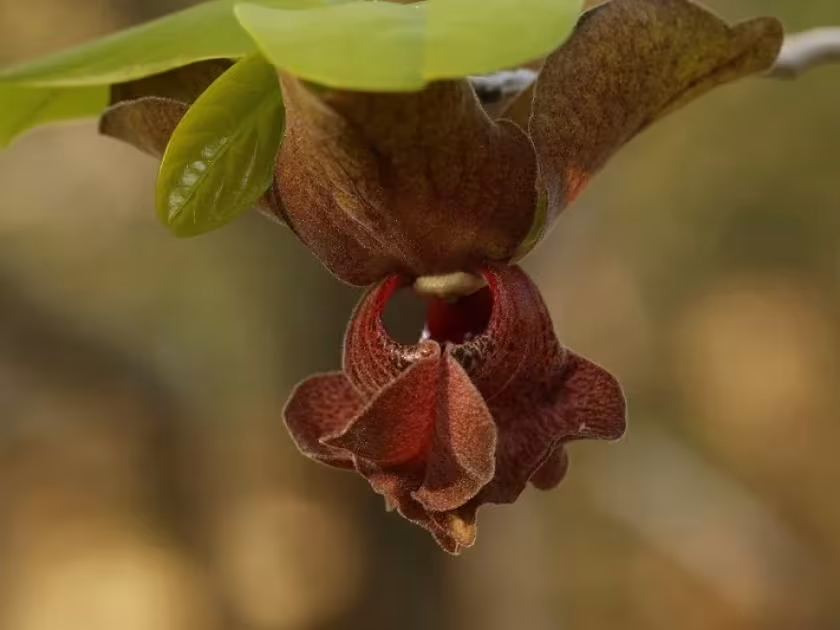
Description
Sowing dates
Monodora junodii seeds require preparation prior to sowing, which includes soaking in warm water for 24 hours to improve germination rates. The optimal time for sowing is the spring season, when temperatures remain consistently high.
Sowing should be carried out in a light, well-drained substrate based on peat and perlite, at a depth of about one to two centimeters. Containers should be covered with film to maintain high humidity and create a greenhouse effect.
Seed germination is a lengthy process that can take from one to several months depending on the freshness of the seeds. It is essential to maintain a substrate temperature of 25–28 degrees Celsius to activate the embryo.
Seedling pricking out is performed when two to three true leaves appear, taking care not to damage the sensitive root system. Transplanting to a permanent location should only be done once the plant has strengthened and reached a height of 20–30 centimeters.
Young plants require gradual adaptation to direct sunlight, so it is recommended to provide light shading in the first few weeks after planting outdoors.
Growing requirements
Monodora junodii is an evergreen tree from the Annonaceae family, naturally occurring in the tropical forests of Africa. It has high demands regarding temperature, preferring stable warmth without drastic fluctuations.
For successful growth, the crop requires fertile, loamy, or sandy soils with a neutral to slightly acidic pH level. It is crucial to ensure excellent drainage, as waterlogging the root zone is fatal for this species.
The plant prefers bright but diffused light, as it naturally inhabits the lower canopy of tropical forests. Direct midday sun can cause burns on the leaf blades, so light shading is advisable in regions with high solar activity.
Humidity must be kept at a high level, which is particularly important during the active growing season. In conditions of low humidity, the tree may drop its leaves and slow down growth, impacting its decorative value and productivity.
Watering should be regular but moderate, allowing the top layer of soil to dry out between sessions. In winter, watering intensity should be significantly reduced, depending on the state of the substrate.
Main diseases and pests
The primary pests affecting Monodora in greenhouse conditions are spider mites and scale insects. They feed on the plant's sap, leading to leaf deformation and a weakening of the crop's overall immunity.
Water stagnation in the soil promotes the development of fungal root diseases, such as root rot. The first signs of infestation are yellowing and wilting of the leaves despite the moist soil conditions.
Mealybugs can also pose a threat by colonizing leaf axils and young shoots. To manage them, regular plant inspection and treatment with specialized systemic insecticides are recommended.
Fusarium wilt may occur if the temperature drops below the recommended range. Prevention involves strict adherence to agricultural practices and disinfecting tools after each inspection.
To prevent the spread of diseases, it is important to maintain good ventilation in the area where the Monodora is grown, avoiding stagnant zones with excessively high air humidity.