
Microsorum thailandicum
Microsorum thailandicum
Description
Growing requirements
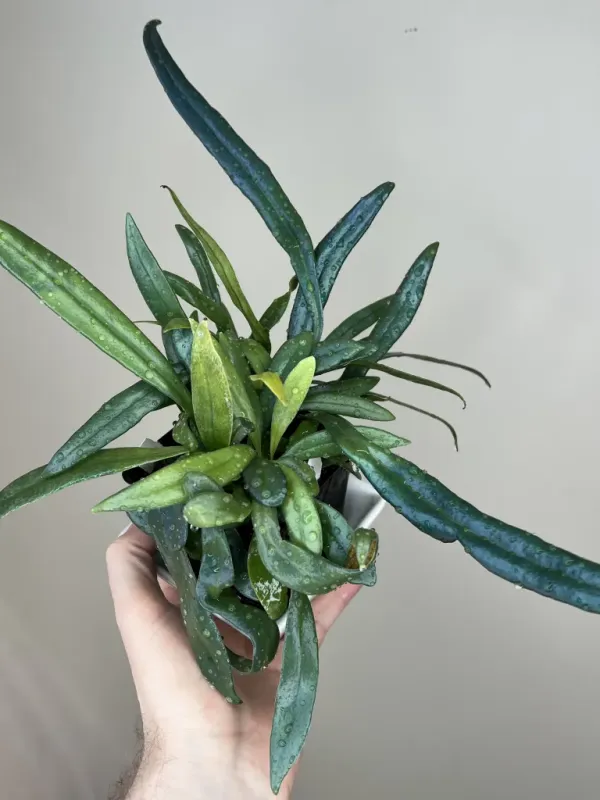
Microsorum thailandicum is a distinctive species of fern belonging to the Polypodiaceae family. It is native to the limestone cliffs of Thailand and parts of Southeast Asia, where it thrives in shaded, high-humidity environments.
This species is globally recognized for its remarkable iridescence. Under low light conditions, its fronds exhibit a metallic, blue-green shimmer, which is a specialized photosynthetic adaptation designed to maximize light capture in the dark forest understory.
Cultivating this fern requires a highly controlled environment. Due to its extreme sensitivity to low atmospheric humidity, it is rarely grown as a standard houseplant and is best kept within the stable microclimate of a terrarium or a high-humidity greenhouse.
The potting medium must be airy, well-draining, and slightly alkaline. Incorporating crushed limestone or dolomite into a bark-based mix mimics the plant's natural lithophytic habitat and helps maintain the appropriate soil chemistry for optimal growth.
Temperatures should be kept consistently between 20°C and 26°C. While the plant appreciates stability, it also requires gentle airflow to prevent the buildup of stale, humid air that encourages unwanted fungal growth on the foliage.
Main diseases and pests
The primary threat to the health of Microsorum thailandicum is root rot caused by waterlogged soil. A robust drainage layer is essential, and water should be applied sparingly, ensuring that the substrate stays moist but never saturated.
Spider mites are the most common pest, especially if humidity levels drop below the required threshold. These pests thrive in dry air and can quickly weaken the fern by sucking sap from the undersides of the delicate fronds.
Inadequate ventilation within a closed container can lead to pathogenic fungal outbreaks, resulting in brown spotting or rot on the leaves. Providing subtle, consistent air movement is a key preventative measure for long-term health.
Using water high in minerals or chlorine will cause salt buildup in the substrate, leading to chlorosis and crispy edges on the fronds. Always prioritize the use of purified, rainwater, or deionized water for irrigation.
In case of pest infestation, avoid harsh synthetic insecticides, which can damage the fern's sensitive tissues. Instead, use biological control methods or gentle physical removal, followed by an immediate correction of the enclosure's environmental parameters.