
Microsorum musifolium
Microsorum musifolium (Blume) Ching
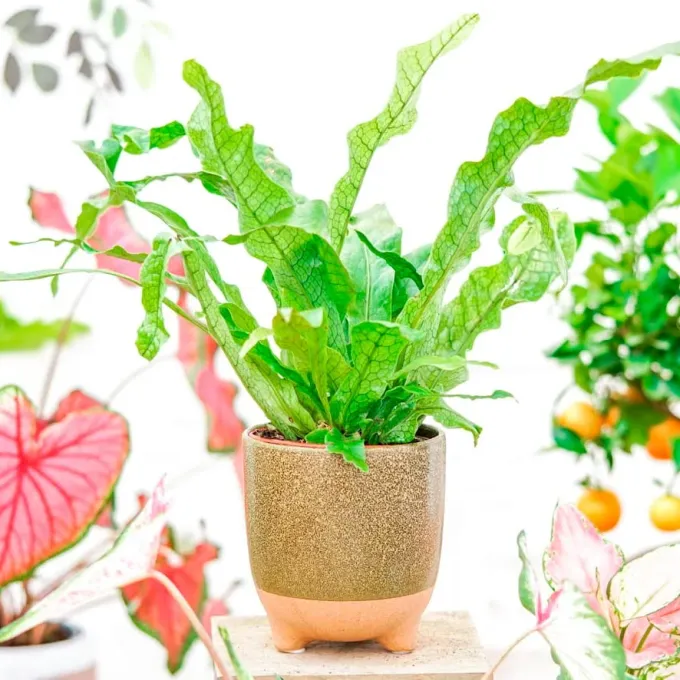
Description
Growing requirements
Microsorum musifolium is a distinct fern species belonging to the Polypodiaceae family. It is native to the tropical regions of Southeast Asia, thriving in high-humidity rainforest environments.
The cultivation of this plant requires consistent warmth, ideally between 20°C and 25°C. Exposure to cold drafts can cause immediate stress, leading to browning of the fronds.
Bright, indirect light is essential for maintaining the health of the fern. While it can tolerate lower light levels, growth rates will significantly decrease without sufficient brightness.
The soil structure must be porous and well-draining. A mix consisting of orchid bark, peat moss, and perlite provides the necessary aeration for its delicate root system.
High relative humidity is the most critical factor for successful growth. Regular misting or the use of a humidifier is necessary, especially during indoor winter months.
Main diseases and pests
Scale insects are among the most common threats to this fern. They attach themselves to the undersides of leaves and stems, extracting nutrients and weakening the plant.
Spider mites are another frequent problem, especially when the plant is kept in low-humidity environments. They cause stippling and discolouration of the fronds.
Root rot, typically caused by fungal pathogens, arises from overwatering or poorly draining pots. It is characterized by blackened roots and an earthy, rotting scent.
Mealybugs can cluster in the sheltered areas of the plant, often protected by a cotton-like secretion. Manual removal combined with insecticidal soap is effective.
To mitigate these risks, it is important to maintain clean growing conditions. Removing dead or damaged foliage prevents the spread of pathogens throughout the plant collection.