
Microlepia strigosa
Microlepia strigosa
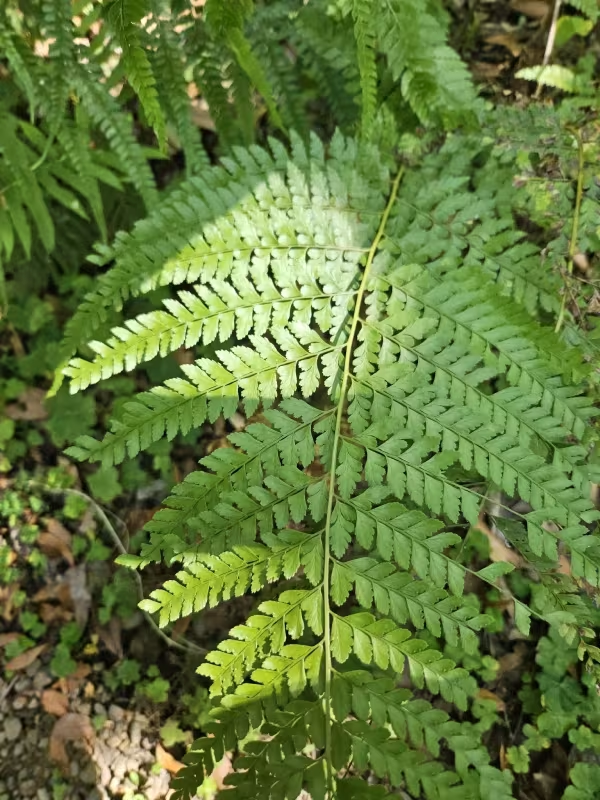
Description
Growing requirements
Microlepia strigosa, commonly known as the bristly lace fern, belongs to the family Dennstaedtiaceae. It is a perennial fern native to tropical and subtropical regions across Asia, thriving in high-humidity habitats.
For optimal growth, this fern requires diffused light conditions, as direct sunlight can scorched its delicate fronds. A consistent temperature range between 18 and 24 degrees Celsius is ideal for its development.
The potting medium must be well-drained yet moisture-retentive. A mix consisting of peat moss, leaf mold, and coarse sand provides the necessary structure and acidity for the plant's root system to thrive.
Humidity is a critical factor for the well-being of the fern. Keeping ambient humidity levels above 60 percent is necessary, which can be achieved through regular misting or using a pebble tray filled with water.
Microlepia strigosa is primarily utilized in horticulture as an indoor ornamental plant. Its arching, delicate fronds make it a popular choice for hanging baskets, terrariums, and sheltered patio spaces in warmer climates.
Main diseases and pests
Scale insects and spider mites are the most common pests that affect Microlepia strigosa. These pests thrive in dry environments and can quickly weaken the plant by feeding on the sap of the foliage.
Root rot is a major threat caused by overwatering or inadequate drainage. If the soil remains saturated for extended periods, the roots lose their ability to absorb oxygen, leading to rapid decay of the entire plant.
Fungal leaf spot diseases can develop if the foliage remains wet for too long without proper air circulation. Ensuring good ventilation and keeping the fronds dry during evening hours helps prevent these infections.
Nutrient deficiency, particularly iron or magnesium, can manifest as yellowing of the fronds. Regular application of a balanced, water-soluble fertilizer at half-strength during the growing season helps sustain plant health.
To maintain a healthy specimen, avoid using hard, mineral-heavy water, which can lead to salt accumulation in the soil. Repotting every two years into fresh, organic-rich soil is recommended to prevent soil compaction.