
Broad-leaved lace fern
Microlepia platyphylla
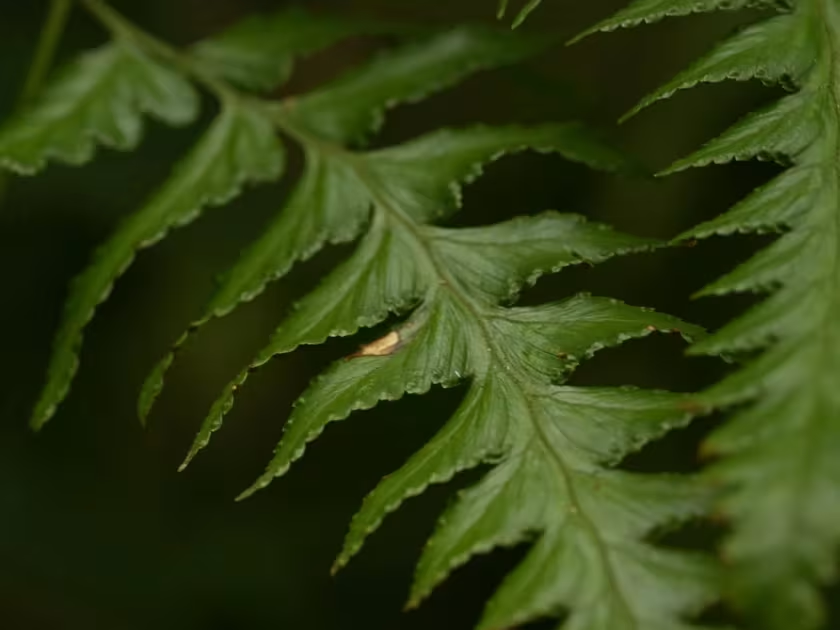
Description
Growing requirements
The Broad-leaved lace fern (Microlepia platyphylla) belongs to the Dennstaedtiaceae family. It is a large, architectural fern native to the tropical forests of South and Southeast Asia, where it thrives in shaded and humid environments.
To cultivate this species successfully, one must maintain a high humidity level, ideally between 60% and 80%. This plant is highly sensitive to dry indoor air, which can cause the fronds to crisp and turn brown at the tips.
The substrate should be rich in organic matter, loose, and well-drained. A mixture of peat, compost, and perlite or coarse sand is generally recommended to provide the necessary structure for the rhizomes to spread.
Light requirements for Microlepia platyphylla involve bright but indirect light. Exposure to direct sunlight must be strictly avoided, as it causes severe tissue damage and leaf chlorosis in this shade-loving species.
Watering should be consistent throughout the year. During the active growing season, the soil should be kept uniformly moist, while in winter, the frequency can be slightly reduced, provided the root ball never dries out completely.
Main diseases and pests
Spider mites are the most common pests affecting this fern, especially in environments with insufficient moisture. Regular misting and cleaning the leaves can effectively manage mite populations.
Mealybugs can often hide in the dense growth of the fronds. Infestations are best controlled through manual removal or the application of insecticidal soaps tailored for delicate foliage.
Fungal leaf spots can occur if water remains on the fronds for too long without adequate airflow. Proper ventilation is essential for preventing these pathogens from spreading.
Root rot, typically caused by overwatering or compacted soil, is a primary threat. It is vital to ensure that drainage holes in the pots are never blocked and the soil remains breathable.
Nutrient deficiency, which manifests as pale or stunted growth, can be prevented by using a balanced, diluted liquid fertilizer during the spring and summer months to support healthy development.