
Swamp saxifrage
Micranthes pensylvanica
Description
Growing requirements
Swamp saxifrage (Micranthes pensylvanica) is a perennial herbaceous plant belonging to the Saxifragaceae family. Native to North America, it is widely distributed across moist habitats, including meadows, swamps, and river floodplains, where it thrives in soil conditions that remain consistently wet.
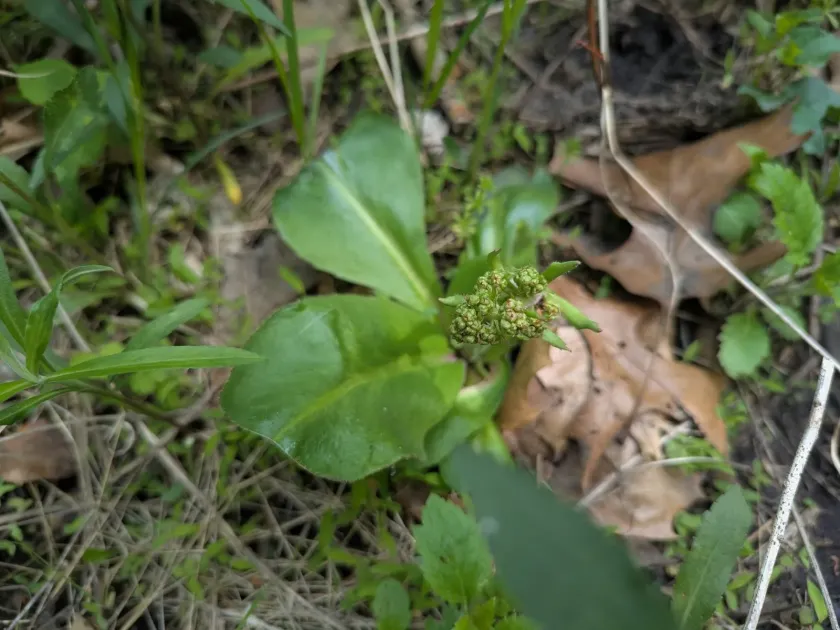
Botanically, the plant is characterized by a dense basal rosette of lanceolate leaves. It produces an erect, unbranched stalk that can reach significant heights, often up to 90 centimeters, which supports a compound inflorescence consisting of small, greenish-yellow flowers that bloom in the late spring or early summer.
The primary requirement for successful cultivation of this species is an environment that mimics its natural wetland habitat. It demands constant soil moisture and is well-suited for heavy, organic-rich substrates like peat or clay-loam that provide necessary nutrients while ensuring the roots stay hydrated throughout the growing season.
Micranthes pensylvanica is highly tolerant of cold temperatures, making it a hardy species for temperate regions. While it performs best in full sunlight, it shows significant adaptability to partial shade, provided that the soil moisture levels are maintained throughout the hottest periods of the summer.
Agronomic management involves selecting appropriate sites where the water table is near the surface. Providing high levels of organic matter in the soil helps mimic natural humus-rich habitats, facilitating the development of a robust root system and ensuring the long-term vitality of the perennial plant population.
Main diseases and pests
The major threats to the health of swamp saxifrage in managed environments are primarily fungal diseases associated with poor aeration of the soil or stagnant water conditions. Root rot pathogens are particularly detrimental if the drainage is insufficient, leading to the rapid decay of the basal rosette.
Foliar issues, such as powdery mildew, may emerge during periods of high humidity and low airflow. Maintaining adequate spacing between plants is an essential cultural practice to allow for optimal air circulation, which helps keep the foliage dry and prevents the spread of fungal spores in the growing area.
Slugs and snails are the most prominent pests encountered when cultivating this species, as they are drawn to the succulent leaves of the rosette. These mollusks can cause extensive damage to the foliage, which necessitates either physical barriers or organic pest control methods to protect the plant's aesthetic value.
Insect pests that target the flowering stalks can also be problematic during the reproductive phase of the plant. Monitoring for signs of aphid infestation or other sap-sucking insects is vital for ensuring the production of healthy seeds or maintaining the general vigor of the plant during the peak blooming time.
Integrated pest management strategies focusing on early detection and environmental control are the most effective ways to manage threats. By ensuring that the plant is grown in its preferred moisture-rich but ventilated conditions, the gardener can reduce the dependency on chemical interventions significantly.