
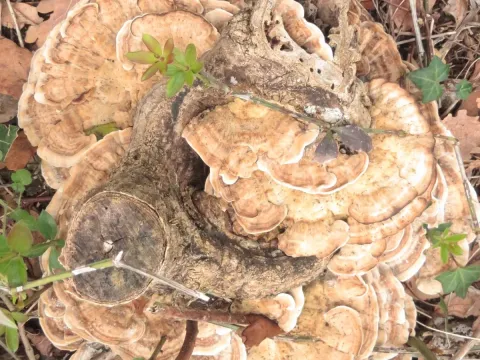
Giant polypore
Meripilus
The Giant polypore (Meripilus giganteus) is a prominent member of the Meripilaceae family. This fungus acts as both a pathogen and a saprotroph, primarily attacking the root systems of deciduous trees.
What the section contains

Giant polypore
The natural range of the species extends across the temperate zones of the Northern Hemisphere. It is frequently found in mature forests where it colonizes living trees and stumps, contributing to the decay of wood.
Ideal conditions for growth involve high humidity and shaded environments. The fungus requires specific moisture levels in the substrate to initiate the formation of its massive, rosette-like fruiting bodies.
Cultivation attempts require a precise substrate composition, typically utilizing hardwood chips or logs to mimic natural growth conditions. Sterilization of the growing medium is essential to prevent contamination.
Temperature management is a key factor in horticultural practice. Keeping the growth area between 15°C and 22°C promotes the healthiest development of the mycelial network and subsequent sporophore emergence.
Environmental stressors such as prolonged drought are the primary threats to the species. Insufficient moisture prevents the formation of fruiting bodies and can eventually lead to the dormancy or death of the mycelium.
Inter-species competition is a constant factor in natural forest settings. Fast-growing fungi often outcompete the Giant polypore for available wood resources, particularly when the substrate quality declines.
Pest infestations, particularly by various fungus-gnat species and wood-boring beetles, can severely damage the structure of the fruiting bodies. This often renders the specimens unsuitable for further research or study.
Changes in forest management, such as the systematic removal of decaying timber, reduce the habitat availability. This loss of substrate directly correlates with a decline in population density.
Bacterial pathogens present in the soil can invade the mycelium if the drainage is poor. Stagnant water around the root base or substrate block often triggers decay of the fungus itself.