
Giant polypore
Meripilus giganteus (Persoon:Fries) Karten
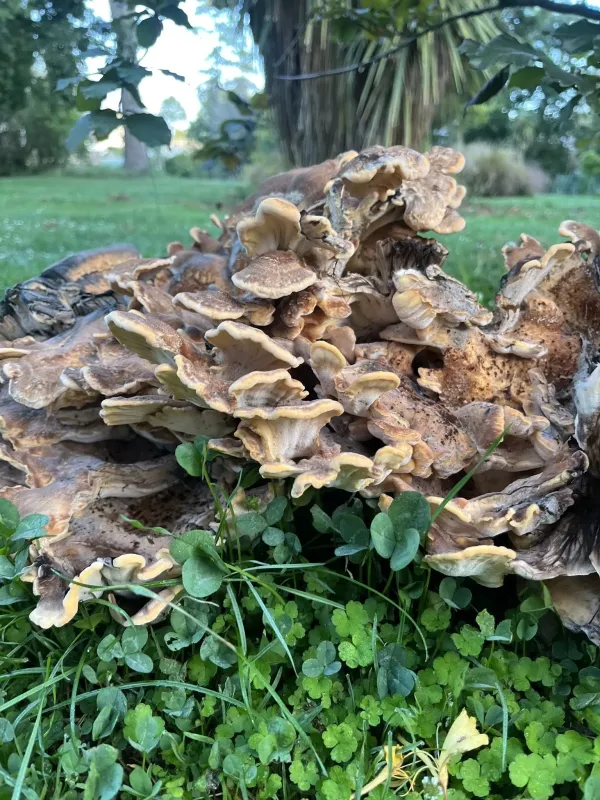
Description
Growing requirements
The Giant polypore (Meripilus giganteus) belongs to the Meripilaceae family. It is a large wood-decaying fungus that typically colonizes the root systems and bases of deciduous trees, with a strong preference for oak and beech species.
The fungus requires specific environmental conditions to thrive, primarily high humidity and temperate weather patterns. In its natural forest habitat, it relies on shaded, moist areas to support the development of its massive fruiting bodies.
In terms of soil and substrate requirements, the fungus needs access to lignified woody tissue. It is opportunistic, often invading trees through pre-existing wounds in the bark or damaged root structures.
For artificial cultivation, success depends on using a sterilized substrate derived from hardwood sawdust or chips. Maintaining a substrate moisture level of approximately 80% is critical for mycelial health.
Proper aeration is essential to prevent anaerobic conditions within the substrate, which would inhibit the development of the fungus and lead to failure of the inoculation process.
Yield
The yield of this species is characterized by large clusters of fruiting bodies that can weigh several kilograms. However, productivity is highly dependent on the quality and volume of the underlying wood substrate.
The culinary utility of the Giant polypore is restricted to young specimens. As the fungus matures, its flesh becomes extremely tough, fibrous, and bitter, which renders it unsuitable for food production.
Industrial scale cultivation is rarely practiced due to the slow growth rate of the mycelium and the specific environmental requirements needed to trigger the formation of fruiting bodies.
Harvesting requires precise timing; once the fruiting body matures, the quality decreases rapidly. Growers must monitor the development stages closely to ensure the product is gathered while still tender.
Because the fungus is a significant forest pathogen, any attempt at cultivation must be carefully contained to prevent the spread of decay to neighboring living trees.
Main diseases and pests
The primary threat in a cultivation setting is contamination by competing fungi such as Trichoderma, which can quickly overgrow the substrate and destroy the mycelial culture.
Insect pests, particularly fungus gnats and various beetle larvae, frequently infest the fruiting bodies. This damage can occur rapidly, often making the harvest unsalable within a few days.
Climatic stressors, such as sudden temperature drops during the primordia initiation phase, can cause the abortion of fruiting bodies, leading to a complete loss of the potential crop.
The fungus is inherently aggressive toward living timber. In forest management contexts, its presence is treated as a severe threat to tree health, causing extensive white rot in the roots.
Poor ventilation during the growth phase can lead to bacterial infections within the substrate, causing the mycelium to collapse and emit foul odors, which confirms the death of the culture.