
Chilean Jasmine
Mandevilla laxa
Description
Growing requirements
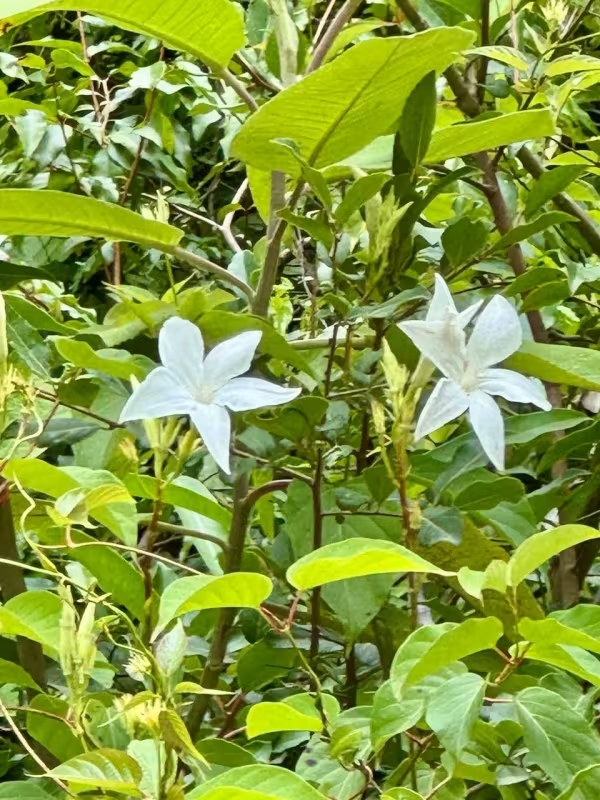
Chilean Jasmine (Mandevilla laxa) is a vigorous woody vine belonging to the Apocynaceae family. It is highly prized in ornamental horticulture for its clusters of large, fragrant, white, trumpet-shaped flowers that bloom profusely throughout the summer season.
Native to the temperate zones of Argentina and Chile, this plant exhibits higher cold tolerance compared to other tropical members of the Mandevilla genus. Its natural habitat includes mountainous foothills, which influences its preference for cooler roots and sunny exposures.
The cultural requirements demand full sun to partial shade, with at least six hours of light daily to ensure prolific flowering. Protecting the plant from harsh afternoon winds is essential to prevent mechanical damage to the delicate, fragrant blooms.
Well-drained, fertile soil with a slightly acidic to neutral pH level is ideal for healthy growth. The substrate should be kept consistently moist during the growing season, but it is critical to prevent waterlogging, as the root system is highly sensitive to hypoxia.
Adequate support structures, such as trellises or arbors, are necessary for the vertical growth habit of this vine. Regular pruning after the flowering cycle encourages branching and maintains a compact, aesthetically pleasing form for landscape design.
Main diseases and pests
Common pests affecting Mandevilla laxa include spider mites, whiteflies, and mealybugs. These insects can cause significant leaf discoloration and stunted growth if populations remain uncontrolled; periodic monitoring and horticultural oil application are recommended.
Fungal pathogens such as gray mold (Botrytis) may develop in conditions of high humidity and poor ventilation. Ensuring adequate space between plants and avoiding overhead irrigation can significantly reduce the risk of such infections throughout the growing season.
Root rot, typically caused by Phytophthora or Pythium species, is a major threat in heavy, poorly drained soils. Symptoms include sudden wilting and darkening of the stem base; management focuses on soil aeration and precise water application techniques.
Leaf spot diseases, caused by various fungal or bacterial agents, can appear during rainy weather. To manage these, it is advisable to remove infected foliage promptly and apply protective fungicides as part of an integrated pest management program.
Healthy plants are more resilient to environmental stress and pests. Maintaining optimal nutrient levels and vigorous cultural practices remains the most effective strategy for ensuring the long-term success of Chilean Jasmine in a landscape or nursery setting.