
Mandevilla hybrids
Mandevilla hybrids
Description
Growing requirements
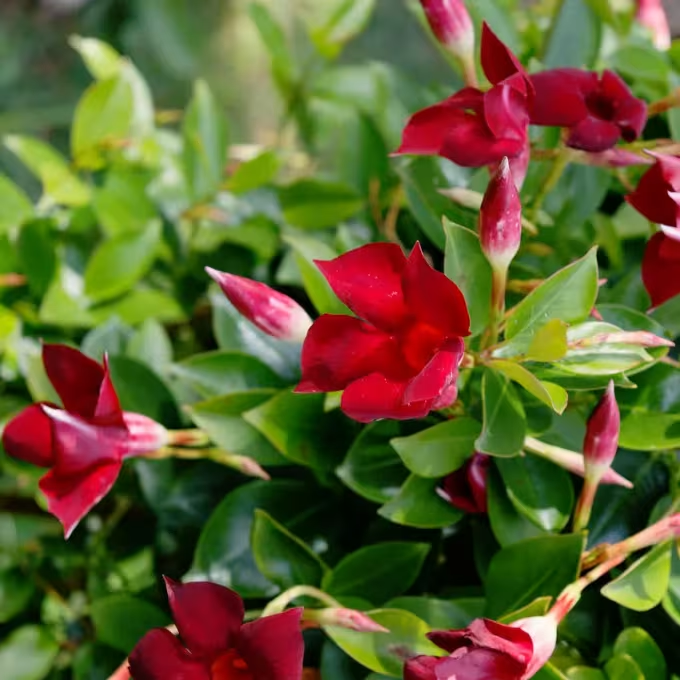
Mandevilla hybrids are highly valued ornamental vines belonging to the Apocynaceae family, native to the tropical regions of Central and South America. They are characterized by their rapid vertical growth and large, trumpet-shaped flowers that bloom continuously under proper conditions.
These plants thrive in environments with bright, indirect sunlight. While they can tolerate some direct morning sun, intense afternoon exposure can scorch the foliage, so positioning in a greenhouse or bright indoor space with eastern or western exposure is ideal.
The ideal temperature for active growth ranges between 20°C and 25°C. As a tropical species, it requires protection from temperatures dropping below 12°C, making it a popular greenhouse or houseplant in temperate climate zones.
A well-draining, nutrient-rich soil mix is crucial for successful cultivation. Adding peat moss, perlite, and organic compost ensures the root system remains aerated while holding sufficient moisture to support the plant's high metabolic rate during the summer months.
Regular maintenance involves pruning long, straggly vines to promote branching and a more compact, bushy habit. Providing sturdy trellises is essential, as the twining stems require support to climb effectively and display their flowers optimally.
Main diseases and pests
Common pests affecting Mandevilla include spider mites, mealybugs, and scale insects. These pests often proliferate when the plant is kept in low-humidity environments, requiring prompt intervention with insecticidal soaps or systemic treatments.
Root rot is the most significant disease threat, primarily caused by overwatering or poorly drained pots. Preventing waterlogging is the most effective cultural practice to ensure the longevity and health of the root system against fungal pathogens.