
Zumi apple
Malus zumi (Matsum.) Rehder
Description
Growing requirements
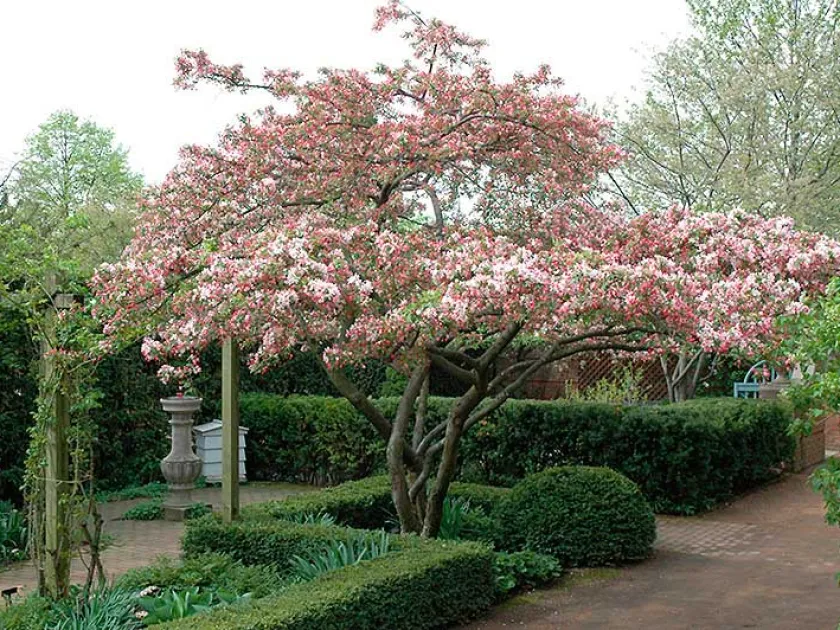
The Zumi apple (Malus zumi) is a member of the Rosaceae family. It is a deciduous ornamental tree characterized by its compact habit and impressive display of flowers in the spring season.
This species is native to Japan, which explains its adaptation to temperate climatic conditions where it thrives in well-lit locations with exposure to direct sunlight.
In terms of soil requirements, it prefers fertile, well-drained loamy soils that can maintain a consistent level of moisture without becoming waterlogged.
Agrotechnical practices include regular irrigation during dry periods and the application of balanced fertilizers during the spring, which supports vigorous growth and floral development.
The tree exhibits decent cold hardiness; however, in regions with severe winters, it is advisable to provide mulch around the base to protect the root system from freezing temperatures.
Main diseases and pests
Zumi apple is susceptible to standard apple tree pathogens, with apple scab and powdery mildew being the most prevalent fungal issues affecting foliage and fruit.
Fire blight is another significant concern that can cause severe damage to the tree's branches, requiring quick action such as pruning and tool sterilization.
Insect pests, including aphids, leaf miners, and scale insects, frequently target the tree, which necessitates periodic scouting and the use of integrated pest management.
To mitigate the risk of disease, it is essential to maintain good air circulation within the canopy through selective thinning and pruning of crossed branches.
Sanitation practices, such as the removal and destruction of fallen leaves and infected plant material, are crucial to breaking the disease cycle in the garden.