
Adstringent apple
Malus xadstringens Zabel
Description
Growing requirements
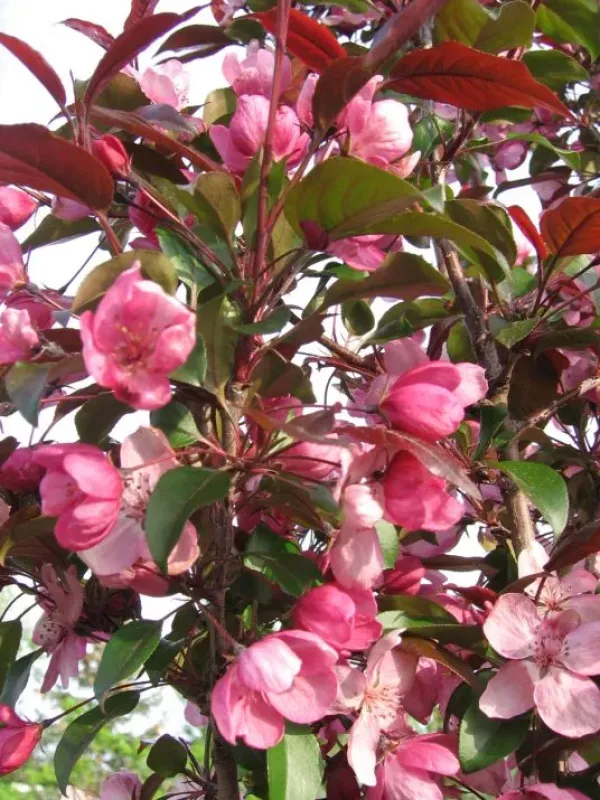
Adstringent apple (Malus xadstringens Zabel) is a hybrid species belonging to the Rosaceae family. It is recognized as a hardy, deciduous tree valued in horticulture for its resilience and ornamental traits, making it a suitable choice for temperate climate landscaping projects.
Originating from hybrid breeding efforts, this species exhibits a strong ability to thrive in various soil types, provided they are well-drained. It demonstrates significant cold tolerance, which allows it to remain a stable component of the garden architecture throughout challenging winters.
Cultivation requires careful site selection. The tree thrives in sunny locations where it can receive maximum light exposure, as this is crucial for canopy development and blossom quality. Soil composition should ideally be nutrient-rich loam, avoiding waterlogged conditions that could compromise root health.
Maintenance practices involve regular pruning to manage the shape and health of the tree. By removing dead or diseased wood during the dormant winter period, growers ensure proper air circulation, which helps prevent the development of moisture-related fungal issues within the dense crown.
Water management is particularly vital during the establishment phase. While mature trees develop a reasonable tolerance to moderate drought, maintaining consistent soil moisture levels during the peak growth season significantly improves the overall vigor and appearance of the specimen.
Main diseases and pests
Like other species in the Malus genus, Malus xadstringens is susceptible to apple scab and powdery mildew. Maintaining a clean environment by removing fallen leaves and pruning infected twigs helps to reduce the inoculum pressure in the garden significantly.
Pest threats include common fruit tree insects such as aphids, mites, and codling moth larvae. Integrated Pest Management (IPM) strategies, including monitoring and the use of targeted treatments, are recommended to maintain the tree's health without disrupting the local ecosystem balance.