
Cutleaf crabapple
Malus transitoria (Batalin) C. K. Schneid.
Description
Growing requirements
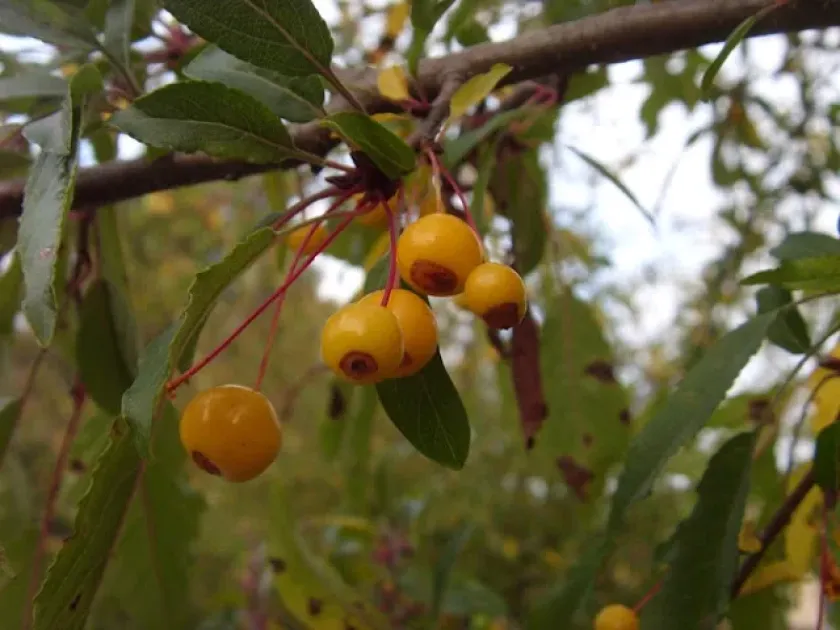
The cutleaf crabapple (Malus transitoria) is a deciduous tree belonging to the Rosaceae family. It is known for its elegant, graceful habit and is highly valued in horticulture for its ornamental properties.
Originating from the mountainous regions of Western China, this species is naturally adapted to cool, temperate climates. Its hardiness makes it a reliable choice for gardens in regions with significant seasonal temperature fluctuations.
For optimal growth, it requires deep, fertile, and well-drained soil. It thrives in sunny locations, as adequate exposure to direct sunlight is essential for maintaining the tree's health and ensuring a prolific display of blossoms in the spring.
Cultural practices include consistent watering during dry spells and the application of balanced organic fertilizers in the spring. Minimal pruning is usually required, focusing mainly on removing dead or crossing branches to maintain the natural structure of the canopy.
The tree is primarily utilized in landscape design for its high ornamental value. Its white flowers and small, persistent fruit make it an ideal specimen for parks, public spaces, and private gardens, providing visual interest across multiple seasons.
Main diseases and pests
Like many members of the Malus genus, this species can be susceptible to fungal diseases such as apple scab and powdery mildew, especially in humid conditions. Ensuring proper spacing and airflow is key to preventing these issues.
Pests such as aphids or leaf-miners may occasionally affect the foliage. Implementing integrated pest management strategies, such as encouraging beneficial insects or applying neem oil, is typically sufficient to keep the tree healthy and thriving.